


 Washington
Latest Coverage
See all articles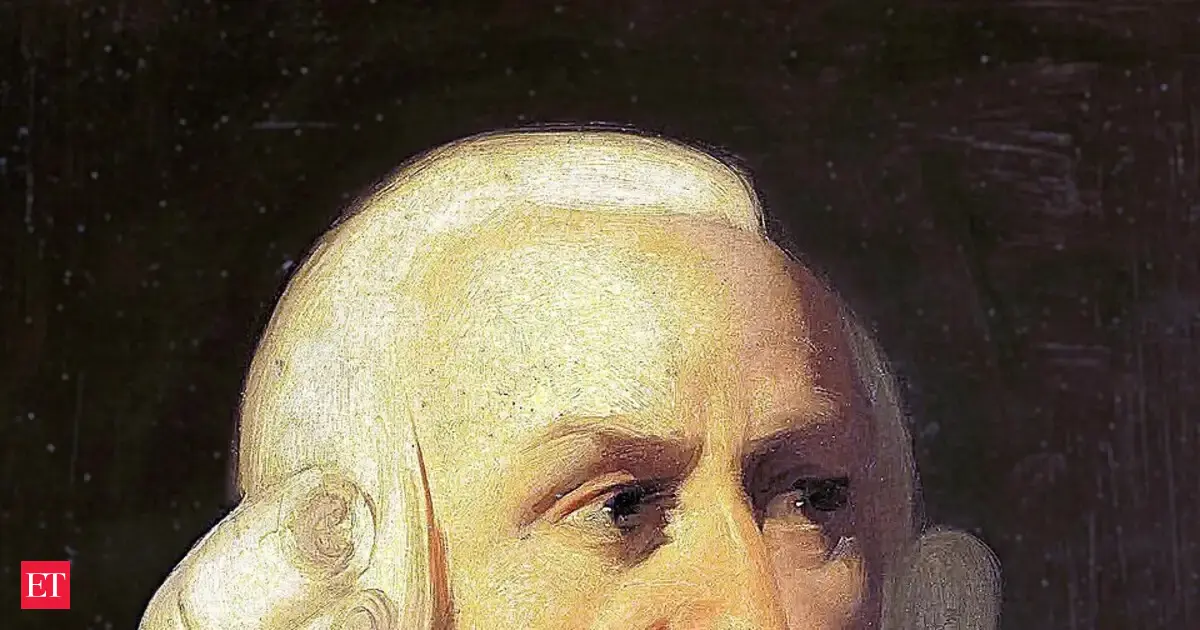
Quote of the day by father of economics Adam Smith: ‘Civil government, so far as it is instituted for the security of property, is in reality…’ – Warning about wealth, power, and society
Synopsis
Adam Smith, the father of modern economics, questioned who governments truly serve. While known for free markets, his writings reveal a deep concern for justice and inequality. A striking quote suggests civil government, in protecting property, often defends the wealthy against the poor. This enduring observation fuels ongoing debates about wealth's influence on political power and policy.
Who does the government really serve? Is it designed to protect everyone equally, or do those with greater wealth inevitably enjoy greater influence?
These questions have sparked debate for centuries, and few thinkers have shaped that discussion more than Adam Smith. Often remembered as the "father of modern economics," Smith was not only interested in markets and prosperity but also deeply concerned with justice, inequality, and the relationship between wealth and political power.
Quote of the day: “Civil government, so far as it is instituted for the security of property, is in reality instituted for the defense of the rich against the poor, or of those who have some property against those who have none at all.”
Who was Adam Smith?
Adam Smith was a Scottish economist, philosopher, and author whose ideas laid the foundations of modern economics. Born in Kirkcaldy, Scotland, in 1723, Smith studied at the Universities of Glasgow and Oxford before becoming a professor of moral philosophy.
Although he is best known for his landmark 1776 book, The Wealth of Nations, Smith's intellectual interests extended far beyond economics. He was deeply fascinated by ethics, human behavior, politics, law, and social institutions. His earlier work, The Theory of Moral Sentiments, explored how empathy, morality, and social relationships shape human societies.
Live Events
In The Wealth of Nations, Smith examined how markets function, how labor creates wealth, and why nations prosper. He introduced influential concepts such as the division of labor and the "invisible hand," arguing that individuals pursuing their own interests can often contribute to broader economic prosperity.
However, Smith was not an advocate of unchecked greed. He criticized monopolies, warned against excessive corporate influence, and expressed concern about the concentration of wealth and power. His writings reveal a thinker who believed that healthy societies require both economic freedom and strong moral foundations.
More than 250 years after his most famous work was published, Smith remains one of the most influential figures in economics, political philosophy, and public policy
What does the quote mean?
At first glance, the quote may seem surprising coming from Adam Smith, who is often associated with free-market capitalism.
In this passage, Smith argues that one important function of government is the protection of property. However, he also observes that property ownership is not evenly distributed. As a result, governments can sometimes act primarily to safeguard the interests of those who possess wealth and assets.
The quote is not necessarily an attack on property rights. Rather, it is an observation about power and incentives. Smith recognized that economic inequality can create tensions within society and that political institutions may often reflect the interests of those with the greatest resources and influence.
Why Smith's words still spark debate
More than two centuries after Smith wrote these words, debates about wealth inequality, taxation, corporate influence, housing affordability, and economic opportunity continue around the world.
Supporters of Smith's observation argue that wealth often translates into political influence, shaping policies in ways that benefit those who already possess economic advantages. Others contend that strong property rights are essential for stability, investment, and economic growth.
More memorable quotes by Adam Smith
“Science is the great antidote to the poison of enthusiasm and superstition.”
“The real tragedy of the poor is the poverty of their aspirations.”
“No society can surely be flourishing and happy, of which the far greater part of the members are poor and miserable.”
“Consumption is the sole end and purpose of all production.”
Crude falls, retail prices don’t. Will it be different this time?
NSE IPO: Will Chauhan’s homecoming end in fireworks this Diwali?
What will the NSE IPO price be? Unlisted market deals offer clues.
How new securities law changes the definition of depositories
Melting mountains: Can India defuse 189 looming flood risks in Himalayas?
Wafers to war: Vinay Dube on how Iran crisis is hitting Akasa
1
2
3