


 Vermont
Latest Coverage
See all articles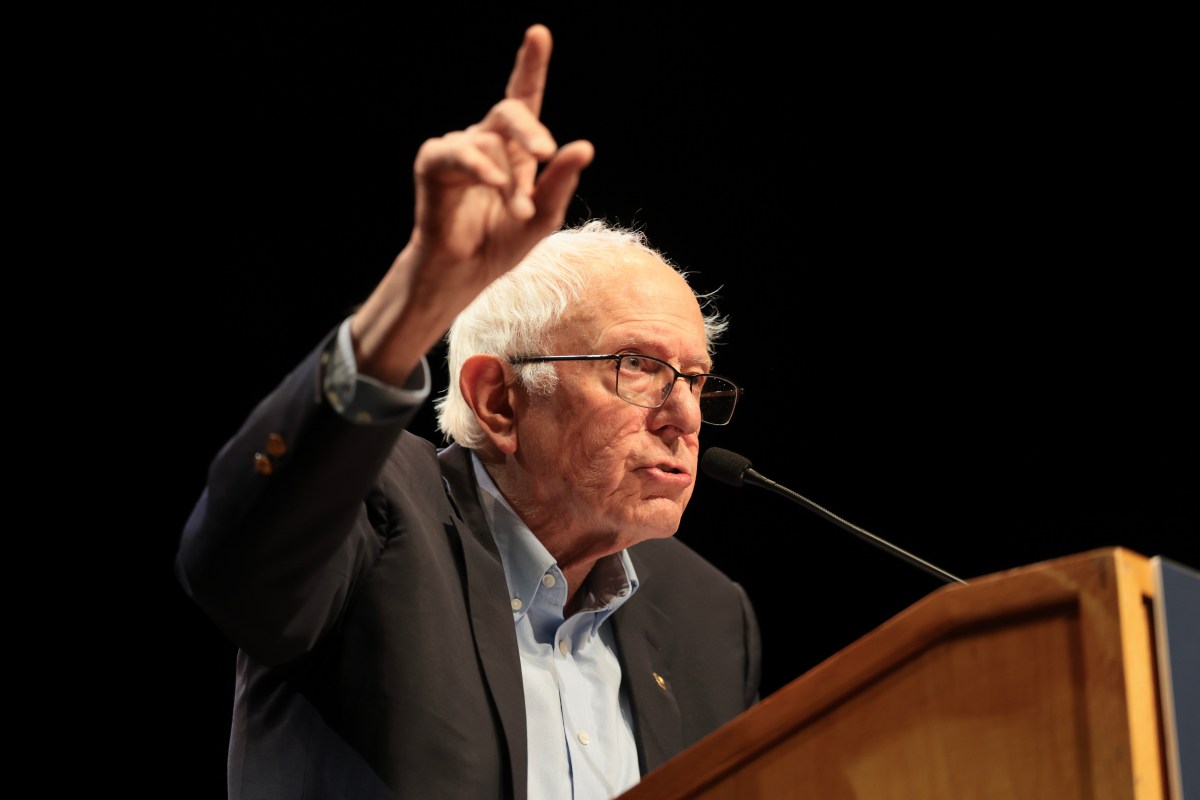
$12,000 Direct Payments to American Families Touted by Bernie Sanders
Independent U.S. Senator Bernie Sanders is promoting a proposal that would provide direct payments of up to $12,000 to American families as part of a broader plan to tax billionaire wealth and expand economic support for working households.
The idea, highlighted during his recent "Fighting Oligarchy" tour stops, has drawn attention as he pushes for progressive candidates and sweeping economic reform.
“What we are talking about is not radical. What is radical is when so few have so much,” Sanders said at a rally event in Orono, Maine, this month. “It is not radical to say that we should not have the highest rate of childhood poverty of almost any nation, and that so many of our seniors live in economic despair.”
Read More on Politics
Why It Matters
The proposal taps into a growing debate over wealth inequality and the rising cost of living. At the center of the debate is whether the federal government should provide direct cash support to households.
Policies once associated with the progressive left, such as direct payments, are gaining more mainstream attention.
What To Know
According to Sanders and Representative Ro Khanna, who co-introduced the Make Billionaires Pay Their Fair Share Act in the House, their new bill would tax billionaire wealth and redistribute it to working families.
The proposal calls for:
Direct payments to families, up to $12,000 annually
Higher taxes on billionaires and ultra-wealthy individuals
Investments in programs supporting healthcare, education and working-class households
“What Sanders’ wealth tax proposal illustrates is the vast amount of wealth that is held by a small number of Americans.,” Drew Powers, founder of Illinois-based Powers Financial Group, told Newsweek. “A 5 percent tax on fewer than one-thousand billionaires could possibly provide meaningful financial relief for an estimated 250 million Americans. That is an astounding figure by any measure.”
What Sanders Has Said
Sanders, the senior senator from Vermont, has been actively promoting the idea during his recent rallies, including events in Maine.
“At a time of unprecedented income and wealth inequality, this legislation demands that the billionaire class in America finally pay their fair share of taxes so that we can create an economy that works for all of us, not just the 1 percent,” Sanders said in a statement. “We can no longer tolerate a corrupt tax code that enables billionaires to pay a lower tax rate than the average worker."
Over the past 50 years, $79 trillion in U.S. wealth has been redistributed from the bottom 90 percent to the top 1 percent, Sanders added. “Enough is enough. Billionaires cannot have it all. It is time to enact a wealth tax on billionaires and use this revenue to address some of the major crises facing working families, the children, the elderly, the sick and the most vulnerable.”
What the Legislation Says
The bill introduced in Congress focuses on taxing extreme wealth to fund public programs, calling for the funds to shift from billionaires toward direct payments for families and social programs to reduce economic inequality across the country.
Some financial experts worry the plan would not solve larger issues within the U.S. economy. “The idea is novel and speaks more toward his redistribution approach, but it does little to solve the underlying systemic issues,” Kevin Thompson, CEO of 9i Capital Group and host of the 9innings podcast, told Newsweek. “When I hear direct payments, I see two things happening almost immediately: those dollars ultimately flowing back to corporations through higher consumption, and more fuel being added to an already inflationary environment.”
What Supporters Say
Backers of the proposal argue there are many potential benefits:
Direct payments could help families manage rising costs and reduce poverty
Taxing billionaires could also address wealth inequality
There’d be more money to fund social programs without increasing middle-class taxes
Criticism and Skepticism
Critics, many of them conservative, have raised concerns about:
Cost of the program
Potential economic impact of higher taxes
Whether direct payments could increase inflation or discourage work
There is also the question of whether the proposal has a realistic path through Congress.
“As alluring of an idea is for $12,000 payments to be sent to many working and middle class Americans, the reality is that any potential wealth tax that could be implemented would have other more pressing fiscal purposes it could feel,” Alex Beene, financial literacy instructor for the University of Tennessee at Martin, told Newsweek.
“With a ballooning federal deficit and upcoming depletion of the Social Security trust fund, any increase in taxation would be more wisely applied to fill those gaps instead of supplying direct payments.”
What Happens Next