


 Vermont
Latest Coverage
See all articles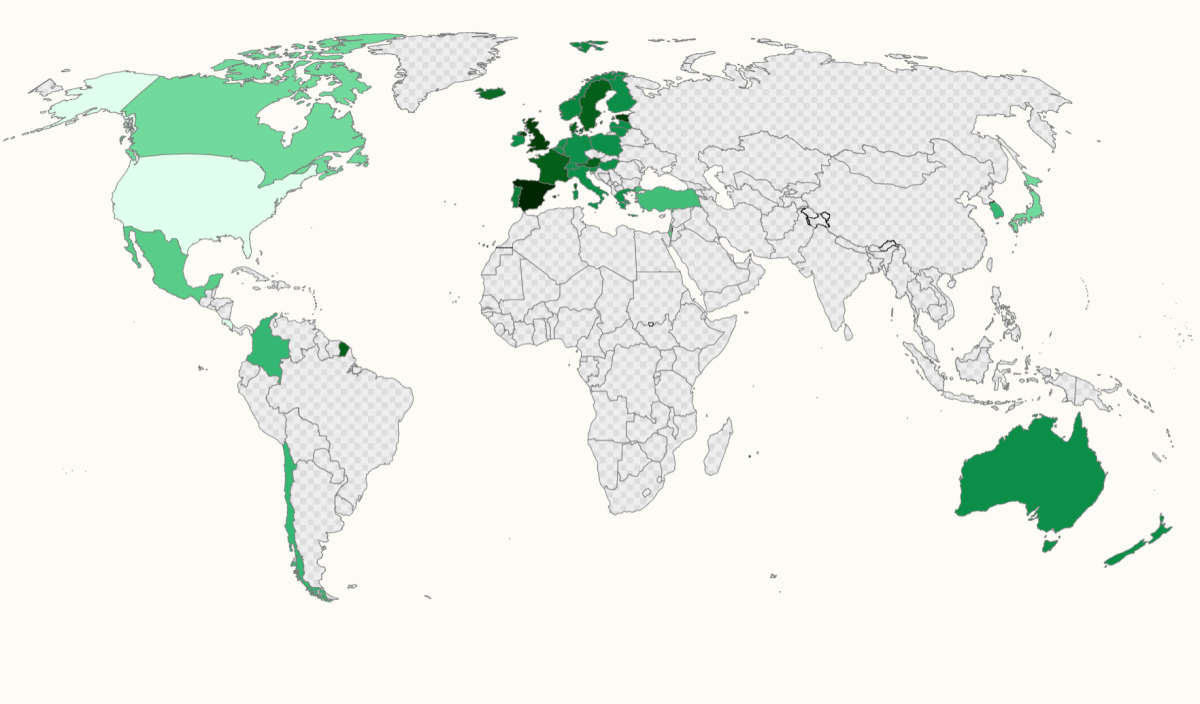
Map Shows Paid Vacation Around the World as Bernie Sanders Pushes US Bill
Senator Bernie Sanders renewed a legislative push on Thursday to establish a federal right to paid vacation, introducing a measure that would guarantee full-time workers at least two weeks of annual paid leave.
The Vermont independent reintroduced the Guaranteed Paid Vacation Act alongside Democratic Senators Chris Murphy of Connecticut, Ed Markey of Massachusetts, Ruben Gallego of Arizona, and Alex Padilla of California. A companion bill was introduced in the House by Democrat Representative Seth Magaziner of Rhode Island.
The proposal highlights a widening gap between the United States and other advanced economies, where paid annual leave is typically guaranteed by law. While most member nations of the Organisation for Economic Co-operation and Development (OECD) require employers to provide at least several weeks of leave, the U.S. remains the only member without a federal statutory minimum.
Read More on News
Sanders described the lack of a national entitlement as an “international embarrassment” and framed guaranteed time off as essential to supporting American families.
What Would the Legislation Do?
Under the proposed bill, workers would accrue at least one hour of paid annual leave for every 25 hours worked. For a full-time employee, that rate translates to a minimum of two weeks of paid vacation each year.
The legislation would also prohibit employers from discriminating against workers who exercise their right to take leave.
“We hear a lot of talk about family values in America, but let’s be clear,” Sanders said. “When a husband, wife, and kids, during the course of an entire year, are unable to spend any time together on vacation, that is not a family value. That is an attack on everything that a family is supposed to stand for.”
The senator continued: “It’s not a radical idea to require companies in America to provide at least two weeks of paid vacation to their workers. What’s radical is that millions of Americans are not only working longer hours for lower wages, but that they do not receive a single paid vacation day. That should not be happening in the United States of America, the richest country in the history of the world.”
Magaziner echoed that sentiment, stating that every American worker deserves the opportunity to rest and spend time with family without risking a paycheck.
The bill’s introduction followed a report released Wednesday by the Center for Economic and Policy Research (CEPR), which found that U.S. workers receive an average of 10 days of paid vacation per year. According to the think tank, nearly one-quarter of U.S. workers receive no paid vacation at all, a figure that rises to 57 percent among the lowest-paid 10 percent of workers.
How the U.S. Compares With Other Countries
Across the OECD, a statutory minimum of four weeks—or 20 working days—of annual leave is standard.
Europe and Oceania: Countries including Australia, Germany, Ireland, Italy, New Zealand, and Switzerland provide roughly four weeks as a baseline minimum. The United Kingdom mandates 28 days, or 5.6 weeks, for a standard five-day schedule, while Luxembourg guarantees 26 working days. Austria, Denmark, France, and Sweden mandate approximately 25 days.
Asia and North America: Japan guarantees qualifying workers 10 days of leave after six months of continuous employment. Mexico begins at 12 working days after the first year, Turkey at 14 days, and South Korea generally at 15 days, subject to attendance requirements. Canada's federal baseline starts at two weeks (10 working days), though most workers are governed by provincial or territorial labor codes.
Some States Already Guarantee Paid Leave
While no nationwide mandate exists, a small number of states have instituted general-use paid leave laws that can be utilized for vacations, though their provisions are generally more modest than international standards.