


 Vermont
Latest Coverage
See all articles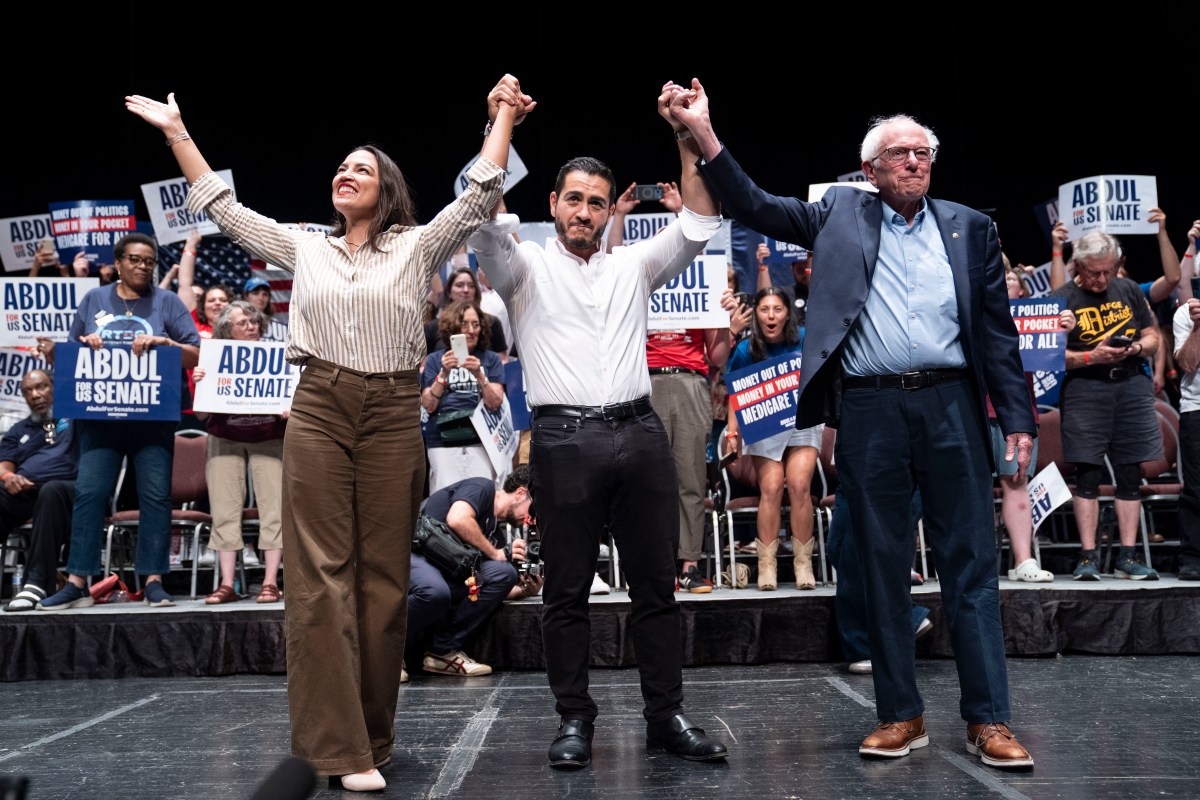
How Bernie Sanders Finally Won
Vermont Senator Bernie Sanders lost the Democratic presidential primary twice, in 2016 and again in 2020. Both times, the party's establishment closed ranks around a more moderate nominee, and Sanders went home to Burlington.
A decade later, the argument he built his campaigns on, that the Democratic Party had grown too cozy with corporate donors and too timid on health care, is no longer a fringe position inside the party. It is close to a consensus one.
Polling now shows Democratic voters embracing the label "socialist" at levels unseen in modern American politics, and Medicare for All and higher taxes on the wealthy testing as some of the most popular ideas the party has to offer. Sanders, meanwhile, remains the most popular sitting senator in the country, in a state with a Republican governor.
Read More on Politics
Bernie Sanders' Signature Issues Are Now Mainstream in the Polls
Some Democratic strategists were writing obituaries for the Sanders wing of the party as recently as the 2020 primary, when Sanders lost the nomination to Joe Biden after a moderate consolidation. Six years later, that wing is arguably running the party's energy, even if it has not yet run the table.
The clearest evidence of the shift is in how Democratic voters describe themselves. An I&I/TIPP poll conducted in late May found 46 percent of Democrats view socialism favorably, compared with 32 percent unfavorably. An Economist/YouGov survey in late June found 58 percent of Democrats view socialism favorably overall, and 62 percent said they would vote for a candidate who identified as a Democratic Socialist. Gallup's most recent measure found 66 percent of Democrats view socialism positively, compared with 42 percent who view capitalism positively, a reversal from a decade ago.
Health care shows a similar pattern. A Data for Progress survey found 65 percent of likely voters, including 78 percent of Democrats and 71 percent of independents, support creating a Medicare for All-style national health insurance program. A separate Data for Progress poll of persuadable swing voters this month found raising taxes on the wealthy and creating a Medicare for All system were the two policies most likely to move an undecided voter toward a Democratic candidate this fall.
Taxing the rich, another Sanders staple, now polls closer to consensus than controversy. A Navigator Research survey found 79 percent of Americans, including 63 percent of Republicans, support raising taxes on the wealthy. A separate analysis from the Excessive Wealth Disorder Institute found two-thirds of Americans back a billionaire income tax, including a majority of Republicans.
The clearest sign of the Sanders coalition's reach is not in the polling. It is on the ballot.
New York Mayor Zohran Mamdani, a democratic socialist, has become the most visible face of the movement's electoral wing. His former campaign strategist, Morris Katz, went on to help launch the Senate campaign in Maine for Graham Platner, an oyster farmer and veteran who ran as an economic populist against Republican Senator Susan Collins before dropping out this month amid allegations of sexual assault, which he has not fully addressed publicly.
In Michigan, Abdul El-Sayed is running for the Democratic Senate nomination against Representative Haley Stevens, a race that has become another proxy fight over the party's direction. In New York, Democratic Socialists of America-endorsed candidates knocked off established incumbents in multiple House primaries this cycle, including Darializa Avila Chevalier's defeat of longtime Representative Adriano Espaillat.
In Minnesota, the open Senate primary between Lieutenant Governor Peggy Flanagan and Representative Angie Craig has become a proxy contest between Sanders-style progressivism and the party's centrist wing, with Senate Democratic leadership reportedly favoring Craig.
The Democratic Socialists of America says it has been involved in more than 130 races this cycle, with dozens of candidates still on primary ballots heading into the fall.
Joseph Geevarghese, executive director of the progressive group Our Revolution, said the appeal is no longer ideological in nature. It is a reaction to what voters see as a government that answers to corporations rather than to them, he said.
"Red Scare tactics only work on people who haven't lived through what unchecked corporate power actually does," Geevarghese told Newsweek. "This generation has. They're not falling in love with an ideology. They're done with a government that answers to corporations instead of to them."
Can Bernie Sanders' Message Win Democrats the Midterms?
The Democratic brand itself is in historically poor shape heading into that argument. A CNN poll this year found the party's favorability at 28 percent, its worst mark in that survey's history dating to 1992.
Jim Kessler, executive vice president for policy at the center-left think tank Third Way, said midterms are typically decided by turnout rather than persuasion. "When extremists win the nomination it juices turnout on the other end of the ideological spectrum as voters feel their values threatened," he told Newsweek, pointing to Mamdani's mayoral win, in which he drew more votes than any winning New York City mayoral candidate in history, but also more opposing votes than any elected mayor in the city's history.
President Donald Trump's approval rating remains low, and voters are unsatisfied with the economy, the Iran war, inflation and tariffs, Kessler told Newsweek, which should favor Democrats if the election becomes a referendum on the party in power. Republicans' only viable bet, he said, is turning the race into "a choice between Republicans and an extremist Democratic Party," pointing to Platner's collapsed Maine campaign as the kind of self-inflicted wound that could hand them that argument.
"For midterm voters this could be an election where they are forced to pick their poison," Kessler said.
Sanders remains the data point neither side can fully explain away. He holds the highest approval rating of any senator in the country, in a small, largely rural state that also elects a Republican governor. Whether that is a template Democrats can replicate nationally, or a singular result tied to one senator's decades-long relationship with Vermont voters, is the question both wings of the party are still arguing about, months before midterm voters render their own verdict.
Can the Sanders Coalition Win Competitive Elections?
Polls suggest Sanders' ideas have moved closer to the Democratic mainstream. But some party strategists argue that popularity within the Democratic base does not necessarily translate into victories in the battleground districts that decide control of Congress.
Kessler sees the same polling very differently.
The bloc of Democratic Socialists of America members heading to Congress next session will remain a small fraction of the overall Democratic caucus, Kessler told Newsweek. But their geography matters more than their headcount, he said.
"June wins in New York City came in districts that on average supported Kamala Harris by 36 points," Kessler said, contrasting that with the House seats Democrats need to flip to regain the majority, which he said average Trump plus 8 points.
"They are winning races in only the most fertile territory and often against an incumbent Democrat who has been in office too long and has been caught napping."
Kessler acknowledged that the word "socialist" no longer scares off as many voters as it once did, largely because the Cold War is ancient history for much of the electorate. But he argued the movement's underlying positions still carry significant risk in competitive districts.
"Democratic Socialists hold some very unpopular positions that, in anything resembling a competitive district, would mean certain defeat," Kessler told Newsweek, citing calls to defund the police, open borders, abolish federal prisons and nationalize large sectors of the economy.
As one example, Kessler pointed to Michigan Senate candidate Abdul El-Sayed, whom he views as a liability in a swing state. He also dismissed the chances of Democratic Socialists winning the party's 2028 presidential nomination as "somewhere between slim and none," adding that if they did, "Republicans will romp to victory."