


 Louisiana
Latest Coverage
See all articles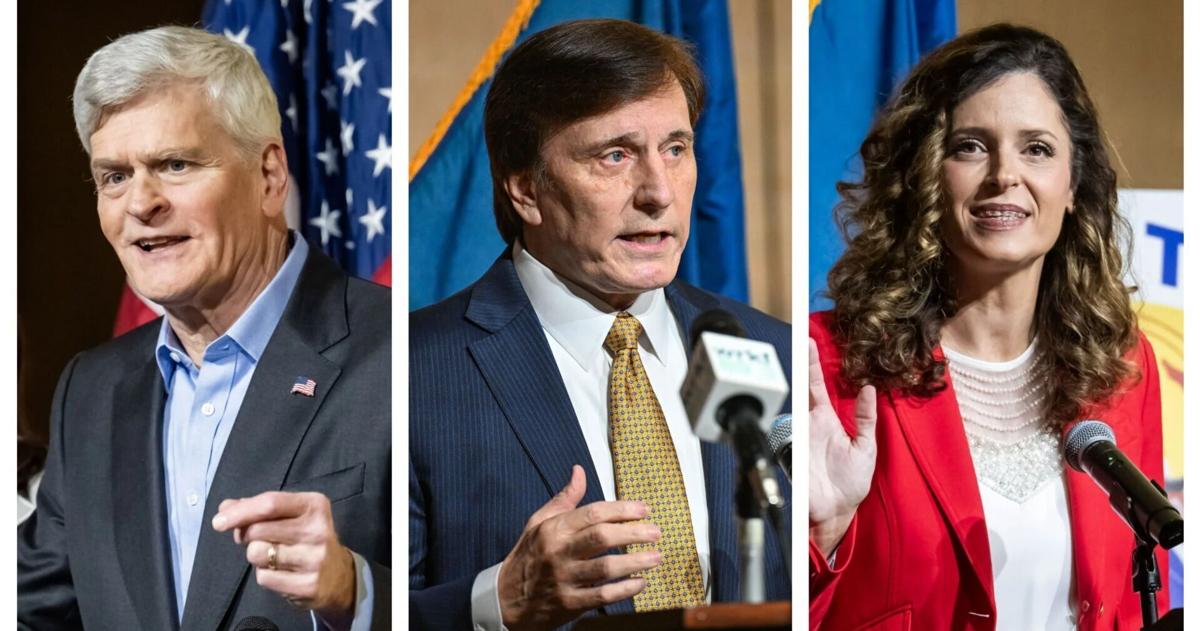
Stephanie Grace: LA Senate race about more than Bill Cassidy
The U.S. Senate primary campaign that’s drawing to a close this week has been depressingly unremarkable, dominated by misleading mudslinging rather than productive policy debate.
What is remarkable, though, is what the precarious position of incumbent Republican Bill Cassidy tells us about this moment in our nation’s politics.
Just take a step back and think about it: A two-term senator who has directed significant resources back home, who has gained enough seniority to chair a powerful committee with jurisdiction over vast swaths of American life – not just health but education, labor and pensions – could get torpedoed by members of his own party in favor of someone who would have significantly less influence and leverage.
This is not how I learned things worked in my political science classes. It’s not how they worked for most of my years covering Louisiana politics, where I was schooled from Day One on how a progression of powerful, long-serving House members and senators helped the state punch above its weight.
This election is shaping up as a referendum on whether any of those old rules still apply, or whether we’ve really left that world behind.
Any conversation about this level of disruption, of course, must begin with President Donald Trump. In Trump’s world – and Congress is certainly that – traditional conservativism has been redefined as loyalty, and loyalty is the only thing that matters. So even someone who reliably supports the president’s agenda, which Cassidy does to a fault, can find himself targeted for one long-ago transgression.
The triggering incident was Cassidy’s 2021 vote to hold Trump accountable for inciting the Jan. 6 attack on Congress, and the instrument of his vengeance is U.S. Rep. Julia Letlow, plucked by the president from the ranks to exact retribution.
But it’s also true that Washington was becoming more polarized even before Trump arrived on the scene. One early adopter of the approach was John Fleming, the former congressman and founding member of the House Freedom Caucus who is now state treasurer. He’s also running in the GOP primary, and while he doesn’t have Trump’s backing, he is claiming to have been MAGA before MAGA was cool.
Of the three, Cassidy’s arc is the most complicated.
He came to the Senate as an avatar of the growing partisan sort, beating three-term Democrat Mary Landrieu in 2014 despite her long history of bringing home the bacon and being in the middle of deals that allowed her to extract benefits for Louisiana. His campaign rhetoric amounted to a constant, irritating but effective recitation of how often Landrieu voted with then-President Barack Obama – 97% of the time, for those who don’t still hear it in their sleep all these years later – who was unpopular in increasingly Republican Louisiana.
Once he got to the Senate, though, Cassidy largely emulated Landrieu’s approach, even as much of Congress shifted ever more toward all-out partisanship. A signal moment was Cassidy’s work on the Biden-era Infrastructure Investment and Jobs Act that sent major investments to the state, but still drew condemnation from every other Louisiana Republican in Congress – including Letlow, who’d campaigned on a promise to bring rural broadband to her district yet voted against the bill that did just that.
His critics call him a RINO (Republican in Name Only), but he’s really more of an old-school pragmatist, a type that Louisianans once appreciated. Perhaps not anymore.
It doesn’t feel like a coincidence that Cassidy’s troubles come as another Louisianan serves as House speaker. You could call Mike Johnson more of a modern-day pragmatist, someone who behaves as if he answers to a constituency of one. Nobody would accuse him of leveraging his exalted position to promote Louisiana-specific priorities, not the way prior generations of members from the state did.
If Cassidy doesn’t finish in the top two in Saturday’s Republican primary and move on to the party runoff – a realistic possibility, according to polls – it will mark another significant step in that direction.