


 New York
Latest Coverage
See all articles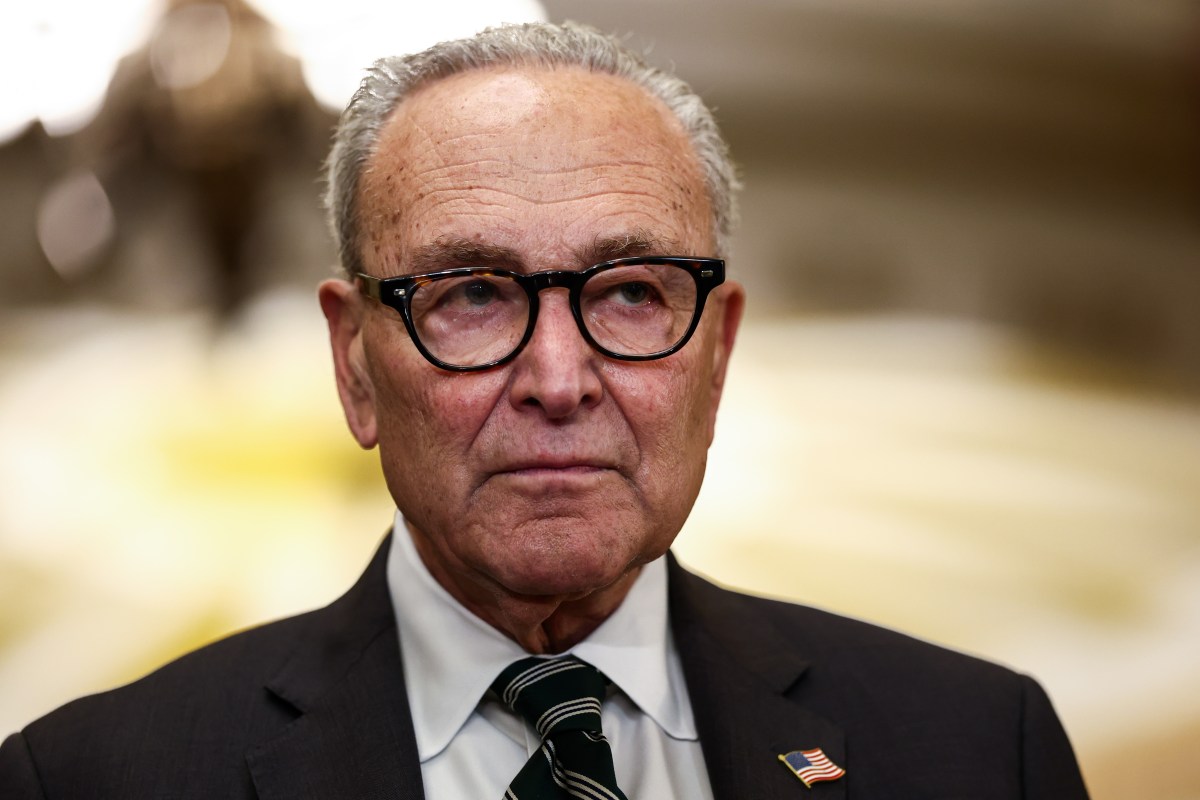
Chuck Schumer’s Future in Doubt-Full List of Democrats Rallying Against Him
Senate Minority Leader Chuck Schumer is facing the most sustained wave of public opposition of his congressional career, with a growing list of Democratic Senate nominees and sitting senators saying he should not continue leading the party after November.
Minnesota Democratic Senate nominee Peggy Flanagan added her name to that list this week, hours after winning her primary, saying Democrats need “a progressive champion” to lead the Senate, and Schumer isn’t it.
Full List of Democrats Rallying Against Schumer
Read More on Politics
Democratic Senate Nominees
Peggy Flanagan, Minnesota Senate nominee
Abdul El-Sayed, Michigan Senate nominee
Juliana Stratton, Illinois Senate nominee
Troy Jackson, Maine Senate nominee
Sitting US Senators
Elissa Slotkin, Michigan senator
Democrats Still in Senate Primaries
Seth Moulton, Massachusetts congressman running against Ed Markey
Schumer's Response
Schumer has largely brushed aside the criticism. Asked in 2025 whether his low approval rating made him a liability, the New York senator told CNN's Manu Raju, "Polls come and go. Our party is united." He has not said publicly whether he will seek a sixth term in 2028.
When El-Sayed won Michigan's primary after campaigning against Schumer's leadership, Schumer praised him for running "an energetic campaign that inspired thousands of Michiganders" and predicted Democrats would "win back the Senate."
He has since campaigned alongside Troy Jackson in Maine, telling reporters last month, "We had a great meeting this morning. We're working together to win the seat, beat Susan Collins and take back the Senate."
How the Opposition Has Grown
Criticism intensified in March 2025, when Schumer supplied enough Democratic votes to pass a Republican-backed funding bill, a move his left flank saw as capitulation. House Democrats reportedly urged New York Representative Alexandria Ocasio-Cortez that night to consider a primary challenge.
The anger resurfaced when a 43-day shutdown later that year ended after eight Senate Democrats broke ranks with Republicans, a deal critics again blamed on Schumer's strategy. More than 50 progressive advocacy groups called on him to step down.
Through 2026, the criticism moved from advocacy groups into the party's own candidate ranks. Democratic socialist and populist candidates began winning contested Senate primaries while campaigning against Schumer's leadership, starting with Stratton and continuing through El-Sayed's win over Representative Haley Stevens and Flanagan's defeat of Representative Angie Craig, each adding a name to the list of nominees who won't back Schumer.
What Top Democrats Have Said About Schumer
Peggy Flanagan
Flanagan defeated Craig in what was described as the most expensive primary in Minnesota history. She has said she is open to Maryland Senator Chris Van Hollen becoming the next Senate majority leader, calling him "a tremendous leader," and plans to work with a progressive Senate bloc known as "The Fight Club."
Abdul El-Sayed
El-Sayed, who narrowly beat Stevens, has endorsed Van Hollen by name, saying at a campaign event, "If I have anything to do about it, the next Senate majority leader—Chris Van Hollen."
Juliana Stratton
Illinois' lieutenant governor was the first primary winner to rule out backing Schumer, saying in a January debate, "I've already said that I will not support Chuck Schumer as leader in the Senate, and I'm the only person on this stage that has said so."
Rivals Raja Krishnamoorthi and Robin Kelly gave more hedged answers.
Troy Jackson
Maine's nominee against Republican incumbent Susan Collins told The New York Times that he does not believe Schumer can rebuild the party's standing with working-class voters, saying his preferred leader would be independent Senator Bernie Sanders: "Obviously Bernie, but that ain't going to happen."
Jackson has since met with Schumer and said the two are "working together" on the general election.
Seth Moulton
Moulton, challenging 80-year-old incumbent Ed Markey in a September 1 primary, said during a debate, "It should not be Chuck Schumer," though he has declined to name a preferred alternative. Markey stopped short of endorsing Schumer too, saying, "We need a big debate about new leadership in the Senate."
Elissa Slotkin
Slotkin has gone further than most sitting senators, saying on SiriusXM, "I believe we need significant new leadership. The old models are no longer working."
Pressed on whether she meant Schumer and House Minority Leader Hakeem Jeffries, she said, "If people can't recognize that the game has fundamentally changed and can't adapt, then they need to make room for others who can."
Chris Van Hollen
Van Hollen, the name most floated as Schumer's successor, has declined to say whether he supports Schumer's continued leadership, telling CNN, "He's got a very tough job. My view is we should get through the 2026 election. See what voters say."
He has described the primary challenges differently than his critics: "What they're doing is running against the Washington establishment."
Bernie Sanders
Sanders has not called for Schumer's removal directly but framed the primary wins as evidence of broader discontent, telling reporters, "The people of New York City and throughout this country are sick and tired of a rigged economic system."
He is Jackson's stated first choice for leader and has campaigned for Flanagan and El-Sayed.
Polling on Schumer's Popularity
Surveys over the past year have shown Schumer with some of the worst numbers of any national political figure. A CNN poll released April 29 found that 17 percent of Americans viewed him favorably, while 44 percent viewed him unfavorably. It was his worst showing in CNN polling since 2017 and lower than that of any other congressional leader tested.
A Marist poll released in late February found that just 27 percent of New York voters rated Schumer's job performance as excellent or good, his lowest rating since the pollster began tracking him in 1999. A Siena College poll released in August 2025 similarly found his favorability among New Yorkers at its lowest point in 20 years.
Nationally, an Echelon Insights survey conducted in mid-November 2025 found Schumer at 24 percent favorable and 54 percent unfavorable. Decision Desk HQ's polling average, tracked through late November 2025, also showed him consistently underwater, with his net favorability bottoming out at -23 in March 2025.
His standing within the Democratic Party has also weakened. A Politico poll from June 2026 found that 47 percent of likely Democratic voters thought Schumer should not remain in leadership, compared with 28 percent who said he should. And in a Data for Progress poll conducted March 26-31, 2025, Ocasio-Cortez led Schumer 55 percent to 36 percent in a hypothetical New York primary matchup.
Who Could Replace Him
Schumer, who turns 76 this year, has not said whether he intends to run for a sixth term in 2028. Several Democrats believe that decision could determine whether a leadership fight happens at all.
Van Hollen is the name most often floated by progressives and Democrats aligned with the party's primary voters, while Schatz is viewed as Schumer's preferred successor. New Jersey Senator Cory Booker, chair of the caucus's communications arm, and Connecticut Senator Chris Murphy have also been mentioned.
Longer term, Ocasio-Cortez remains the most discussed potential challenger to Schumer's Senate seat in 2028. She told ABC's This Week in August that "anything is possible at this juncture."
But Schumer's future as leader will not be decided by primary voters, House members or polling. It will come down to a secret-ballot vote by the Senate Democratic caucus after November, when sitting and newly elected senators will decide. That gives Schumer institutional advantages his critics lack, including incumbency, decades of relationships and control over fundraising and committee assignments.
Van Hollen has so far stopped short of directly challenging him.