


 North Carolina
Latest Coverage
See all articles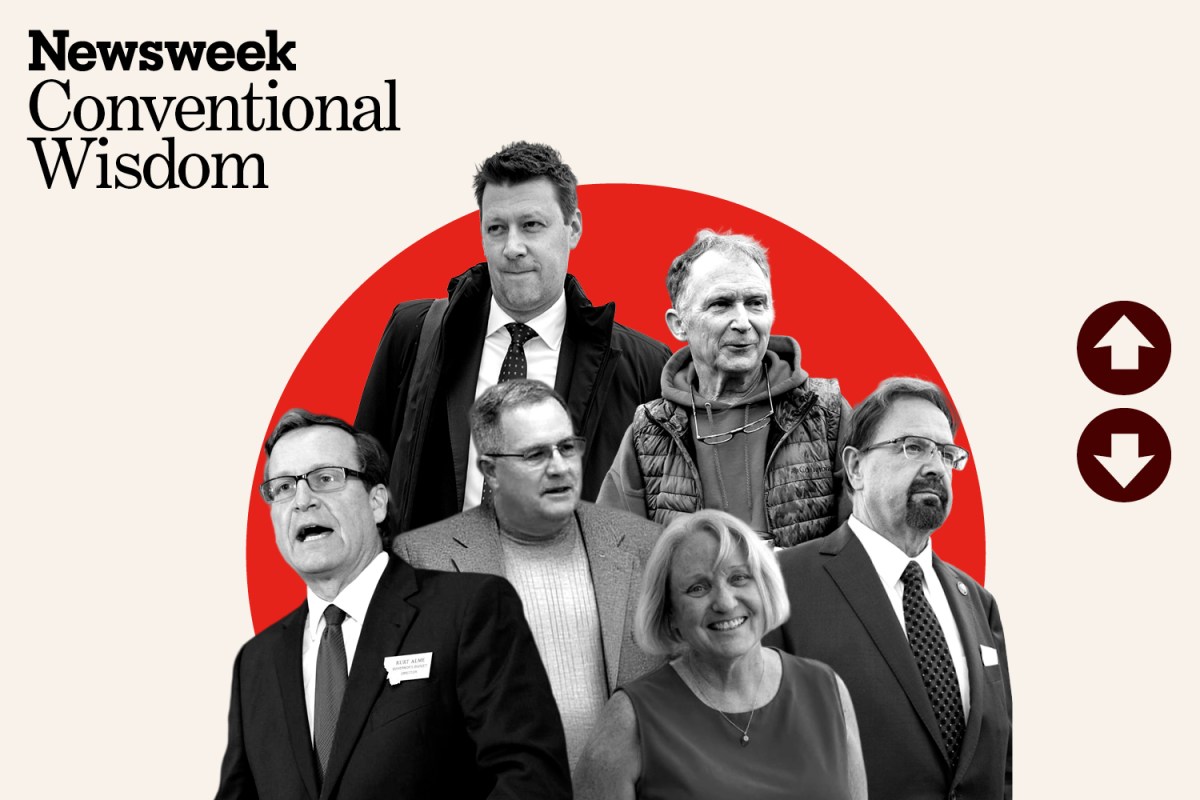
Conventional Wisdom: Midterm Mania Edition
A midterm campaign is supposed to be an argument settled by the people it is aimed at. But sometimes the decisive moves come elsewhere, and voters are left to ratify outcomes arranged before anyone consulted them.
Candidates learn their own fate the way everyone else does, doomscrolling on their phones.
Luck used to arrive disguised as hard work. Now it arrives as paperwork.
Read More on Opinion
Chuck Edwards ⬇
The North Carolina Republican was censured by the House 413 to 2 after its Ethics Committee found that he had given two young female staffers jewelry, designer handbags and guns, sent them middle-of-the-night texts and commented on their weight.
Edwards denied sexually harassing them. His insistence that "generosity is not sexual harassment" persuaded exactly one other member, Representative Ralph Norman of South Carolina, who decided to give up his safe House seat to lose first a primary for governor and then the primary for the late Lindsey Graham's Senate seat, and had no votes left worth saving.
Josh Riley ⬆
The Democratic congressman defending a perennial battleground seat in New York’s Hudson Valley got the best news of his campaign from the other side's accountants, when the GOP's Congressional Leadership Fund canceled the $4.8 million in ads it had reserved to boost his opponent, Republican state Senator Peter Oberacker.
Riley's most effective ally this cycle was a spreadsheet in Washington.
Dan J. Sullivan ⬆
The retired elementary school teacher and registered Republican with no political experience and no relation to Alaska's junior senator, Dan S. Sullivan, qualified for the November Senate ballot in August, Republican lawyers having already tried to knock him off and failed.
Dan J. Sullivan says being represented by a senator whom he both opposes and shares a name with had gotten to him: "it just sort of hit harder maybe than it hits other people."
Cindy Burbank ⬅➡
The Nebraska Democrat went to the state Supreme Court in March to get back on the Senate ballot after the secretary of state struck her off at Republican request. She won, and then won the May primary.
Then in July she abandoned the nomination to clear the field for the independent, Dan Osborn, challenging incumbent Senator Pete Ricketts. She litigated her way onto a ballot she had openly said she had no intention of remaining on.
Kurt Alme ⬆
The U.S. attorney for the District of Montana had never run for anything. At 4:52 p.m. on the March filing deadline he filed for the Senate and resigned his office; Senator Steve Daines withdrew from his own reelection a few minutes later, and the endorsements—Daines along with President Donald Trump and Governor Greg Gianforte—arrived that evening. Alme won the June primary with 76 percent.
An open primary that lasted a few minutes.
Thomas J. Smith ⬆
The retired General Motors engineer and salsa maker suspended his campaign in Michigan's 8th District Republican primary in July and endorsed a rival on Facebook.
He won it anyway on August 4 with just over half the vote, beating Trump-endorsed Amir Hassan, who had raised more than $700,000 to Smith's $1,850—a figure Smith disclosed to the FEC in a handwritten letter.
He now faces Representative Kristen McDonald Rivet, having run perhaps the cheapest and least willing primary campaign in America.
Originally a staple of Newsweek's print edition, Conventional Wisdom used arrows to track whose stock was rising or falling in the political circus. We're reviving it in the digital age because the problem it lampooned—hyperbole and partisan certainty masquerading as insight—has only intensified.
CW assigns arrows—up, down, or sideways—to the figures and forces shaping current events. The arrows don't predict the future or claim special insight. They capture the prevailing winds of the moment, uncluttered by tribal howling. In an era when partisan media reinforces rather than questions assumptions, CW operates from the center—skeptical of left and right alike, committed to puncturing inflated reputations and recognizing overlooked truths.