


 Iowa
Iowa
Latest Coverage
See all articles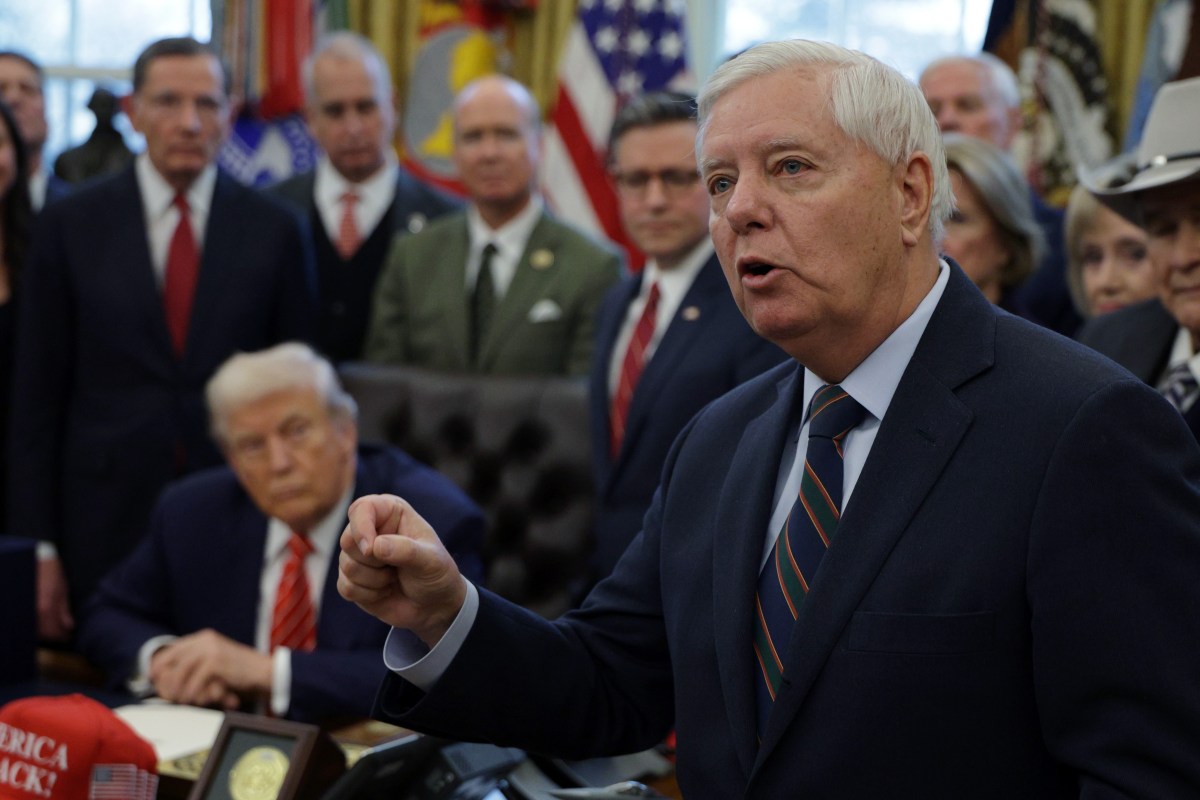
Can Congress Derail Trump's Iran Deal? Republican Allies Signal Concern
President Donald Trump's newly announced agreement with Iran is facing scrutiny not only from Democrats but also from some of his Republican allies, raising questions about whether Congress could slow, reshape, or possibly try and block portions of the deal.
Trump on Sunday announced that the United States and Iran had reached an agreement, with a formal signing ceremony expected later this week. The president confirmed on Monday that the deal was "all signed." The administration has described the arrangement as a memorandum of understanding (MOU) tied to a ceasefire and a framework for future negotiations, including discussions related to Iran's nuclear program.
While many Republicans have praised Trump's efforts to end hostilities with Iran, some GOP lawmakers have signaled concerns about the deal's details and have argued Congress should play a role in reviewing any agreement that could involve sanctions relief or long-term commitments toward Tehran.
Read More on Politics
Why Republicans Are Raising Concerns About Trump's Iran Deal
The Republican criticism is not necessarily opposition to diplomacy itself. Rather, several lawmakers have argued that Congress should closely examine any agreement that could ease pressure on Iran or alter U.S. policy toward the country.
Senator Chuck Grassley, an Iowa Republican, told Newsweek on Monday that Iran doesn't have "a very good history" of abiding by agreements. However, he said he hopes "they would change their tune." He declined to comment directly on the deal, saying he wanted to "read it" first and noting that it won't be released until Friday.
"I am somewhat concerned that Iran’s view of the agreement seems different from what the American negotiating team is claiming. Under our law, any nuclear deal with Iran will be sent to Congress for review and a vote. I look forward to reviewing the final product," Senator Lindsey Graham, a South Carolina Republican and close ally of the president, posted to X on Sunday.
On Monday, he spoke favorably of the deal, while again reiterating the role of Congress to review it. "I look forward to reviewing the actual document rather than relying on Iranian propaganda reports. The sooner it is released, the better," he said.
GOP Senator Ted Budd of North Carolina told Newsweek he is waiting for the deal to come before Congress, saying "we'll fully evaluate it." When pressed on whether there are conditions that should or shouldn't have been in the deal, Budd said, "We're definitely going to review that."
On Friday, before the deal was announced over the weekend, Senator Kevin Cramer, a South Dakota Republican, said he was "skeptical" of the pending deal. "I hope that we're not going to give up too much," he said, adding that he appreciates Trump's "optimism" but remains "a little bit skeptical about the ability to endure through this."
The concerns largely revolve around three issues:
Whether sanctions relief could provide Iran with substantial economic benefits.
Whether the agreement adequately addresses Iran's nuclear activities.
Whether Congress will have a meaningful role in reviewing or overseeing implementation.
Those questions are more prominent because the administration has not yet released the full text of the agreement, leaving lawmakers and analysts attempting to assess its scope and legal implications. Trump told reporters on Monday that he supports the release of the MOU, which he said should happen on Friday.
For many Iran hawks in both parties, the central issue is whether the agreement merely establishes a temporary framework for further talks or commits the United States to policy changes that Congress believes it should have an opportunity to review.
Vice President JD Vance, who was key to negotiating the deal, said Monday on X that the agreement ensures "Iran will never obtain a nuclear weapon and the Strait of Hormuz will be fully reopened." He added, "peace and prosperity for the American people, that's what this deal is all about."
What Role Does Congress Actually Play?
The role that Congress plays depends largely on how the administration structures the agreement.
Trump and senior administration officials have described the arrangement as an MOU rather than a formal treaty. Reports indicate the agreement serves as a framework for a ceasefire and future negotiations over unresolved issues, including Iran's nuclear program.
If the deal remains an executive agreement or political framework, Congress may have limited ability to stop it directly. Presidents of both parties have entered into international agreements without seeking Senate ratification.
Congress nevertheless retains some leverage. Lawmakers can conduct oversight hearings, pass legislation affecting sanctions, impose reporting requirements, restrict funding for implementation and seek votes expressing support or opposition to the agreement.
The key legal question may involve the Iran Nuclear Agreement Review Act, known as INARA. Passed in 2015 with overwhelming bipartisan support, the law gives Congress a formal review process for certain nuclear agreements with Iran.
Whether INARA ultimately applies to Trump's deal remains unclear because the full text has not yet been released. Much will depend on whether the final agreement contains provisions related to Iran's nuclear program that fall within the scope of the law.
What Is INARA and Could It Apply to Trump's Iran Deal?
INARA was enacted in 2015 after lawmakers from both parties demanded a formal role in reviewing President Barack Obama's negotiations with Iran. The law requires the president to submit certain Iran-related nuclear agreements to Congress and creates a review period during which lawmakers can scrutinize the deal and potentially move legislation responding to it.
Supporters argue the law ensures congressional oversight of major agreements involving Iran's nuclear program. Critics have long debated how broadly the law applies and whether administrations can structure agreements in ways that avoid triggering its review provisions.
Because the Trump administration has described the current accord as a memorandum of understanding and because negotiations over Iran's nuclear activities are expected to continue, legal experts are likely to debate whether the current framework, a future nuclear agreement, or both would require congressional review.
That distinction matters because Congress may have more authority over a formal nuclear accord than over a broader diplomatic framework or ceasefire agreement.
Could Congress Stop Trump's Deal?
At this stage, it appears unlikely that Congress can stop the deal.
Congress could complicate implementation of the agreement, particularly if lawmakers object to sanctions relief or conclude that the administration is sidestepping congressional authority. But the practical and political obstacles to completely derailing the deal are significant.
Trump remains the dominant figure in the Republican Party, and there is currently little evidence of enough opposition within the GOP to override a presidential veto or force a fundamental change in administration policy. If lawmakers attempt to pass legislation restricting the agreement, Trump would have veto power. Overriding a veto would require two-thirds majorities in both chambers, one of the highest thresholds in American politics.
Congress could also seek to reimpose sanctions, limit funding related to implementation, or use hearings and investigations to pressure the administration. But those measures would likely shape how the agreement is carried out rather than prevent it from taking effect.
As a result, the most realistic scenario is not Congress killing the deal outright. Instead, lawmakers could more likely use hearings, reporting requirements, sanctions authorities and public pressure to influence implementation and any future negotiations with Iran.
What Happened When Congress Reviewed Obama's Iran Nuclear Deal?
The closest historical comparison to any Iran deal is President Barack Obama's 2015 Joint Comprehensive Plan of Action, commonly known as the JCPOA.
Before the agreement took effect, Congress passed INARA, creating a formal review process for the deal. Lawmakers were given time to examine the agreement and consider resolutions of approval or disapproval.
Republicans strongly opposed the JCPOA and attempted to block it. However, opponents were unable to secure enough support in the Senate to overcome Democratic backing and procedural hurdles. As a result, the agreement moved forward despite intense congressional opposition.
Trump later withdrew the U.S. from the JCPOA during his first term, underscoring both the limits of congressional power and the significant authority presidents retain over the implementation and continuation of international agreements.
What Happens Next?
The immediate near-term focus will be on the release of the agreement's full text.
Lawmakers in both parties are expected to scrutinize provisions related to sanctions relief, nuclear restrictions, verification mechanisms and enforcement measures. The administration has indicated that additional negotiations are expected, meaning many of the most consequential questions surrounding Iran's nuclear program may not yet be resolved.