


 South Carolina
Latest Coverage
See all articles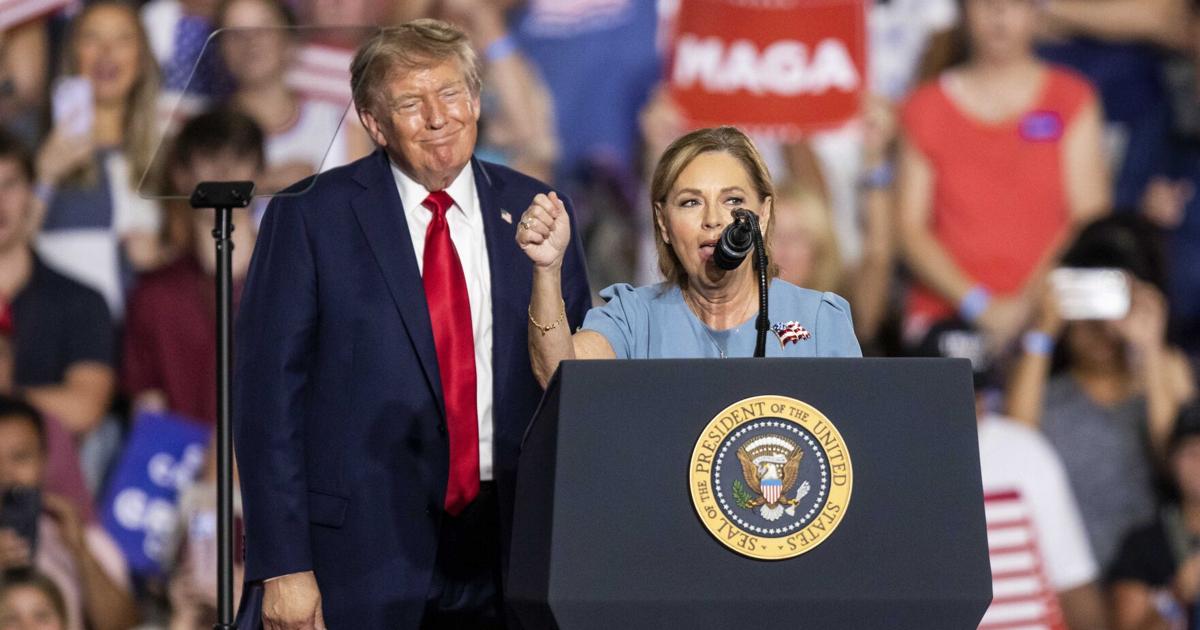
The anatomy of Darline Graham’s Senate primary win in SC
COLUMBIA — Watching election returns roll in for Darline Graham on Aug. 25, her weaknesses in the conservative Upstate were being exposed.
Spartanburg and Greenville counties (the same places her late brother Sen. Lindsey Graham could not win in his June 9 primary), were heavily against her, padding opponent U.S. Rep. Ralph Norman’s commanding margins throughout the Upstate and Charlotte suburbs.
Even Oconee County, the lone Upstate county Darline Graham carried in the first round of special primary voting Aug. 11, was going for Norman.
But yet there was a bright spot emerging hundreds of miles away on the coast, in the ruby-red Grand Strand — certified Trump Country and the stomping grounds of former rival in the race U.S. Rep. Russell Fry, where returns came in overwhelmingly for Graham.
When the night was over, she’d won Horry County — home to Myrtle Beach — by some 17,000 votes, allowing her to neutralize Norman’s Upstate winning streak and take the nomination.
Strategists told The Post and Courier in the days leading up to Election Day they thought Norman could win the nomination if he could carry the Upstate by a margin of two-to-one — which he did — and remain competitive throughout the state. But the day’s turnout was unexpectedly higher for the runoff in other parts of the state, particularly in the Lowcountry and coast.
Myrtle Beach made the difference. In the end, Norman lost statewide by a margin of about 18,000 votes.
The Trump effect and Horry County
There's "no doubt" that Trump's rally in Myrtle Beach the Friday before the election fueled turnout for Graham in Horry County, local GOP chair Reese Boyd said.
More people there voted in the runoff than the first round on Aug. 11, with Graham appearing to have absorbed the bulk of the area's initial support for Fry. He endorsed Graham after his third-place finish in the first round of voting.
Turnout in the primary surprised Boyd since usually it’s a challenge to keep voters motivated in a runoff. But that wasn't a problem for Graham’s campaign this time as money and media flooded an area predominantly populated by people not originally from South Carolina.
"I think it's a combination of several factors but certainly the president's endorsement, and particularly his appearance in Horry County and all of the attention that that generated, I'm sure pushed those numbers," Boyd said.
Turnout fluctuation may have anecdotally counted for a lot, added Chris Cooper, a professor of public policy at Western Carolina University who regularly writes on competitive elections on his “Anatomy of a Purple State“ blog. But the data ultimately didn't bear that out.
Running the numbers after election night, Cooper found that voter behaviors actually did not change from the first round to the runoff, even though some 33,000 more people voted in the second half of the election than the first.
“In some ways, it was remarkably predictable and remarkably boring, right?” Cooper told The Post and Courier the morning after the election.
“I think a lot of folks, including me, thought that a runoff — the fourth primary election of the year — would lead to a different kind of electorate,” he added. “And what we found is that's not really true. It was actually pretty typical of what we've seen before.”
Money mattered, too
In the lead-up to the race, multiple political action committees — Graham’s allied PAC Security is Strength, the Palmetto Action PAC, and a constellation of special interest groups from the tech sector to abortion groups like the National Right to Life Fund — ran aggressive text messaging campaigns in addition to negative anti-Norman advertising.
The intended effect was to drive turnout, pushing voters to the polls with incessant reminders Trump endorsed Graham while Norman was a “traitor” to the president, as one advertising push alleged. And there was a lot to listen to. As of Aug. 26, campaign finance disclosures showed $5.9 million had been spent by independent groups opposing Norman compared to just $517,000 supporting him.
Graham, meanwhile, saw just $392,000 spent against her by outside groups, while they spent about $5.7 million boosting her, drowning out the much-smaller auxiliary support Norman received from groups like the Courageous Conservatives PAC and a number of smaller right-wing groups aligned with the U.S. House Freedom Caucus and the Tea Party movement of the early 2010s.
But it was still Trump himself who might have sparked the final push, urging voters to vote for Graham in the closing days as if he were on the ballot while directing more than $800,000 from his own allied PAC, MAGA Inc., to blitz South Carolina voters with calls and text messages the weekend before the election.
“The problem that we have is they say that Trump does great when he's on the ballot, but when he's not on the ballot, his people don't come and they don't vote for senators, congressmen, and other Republicans,” he said during his Myrtle Beach rally trying to drum up support for Graham.
“So what I really want you to do is pretend, please, that I'm on the ballot,” he added. “Just come and vote. It's so important. So just say that I'm on the ballot one more time. You got to say it, and you got to come out and vote.”
Politics reporter Ian Grenier contributed.