


 Massachusetts
Latest Coverage
See all articles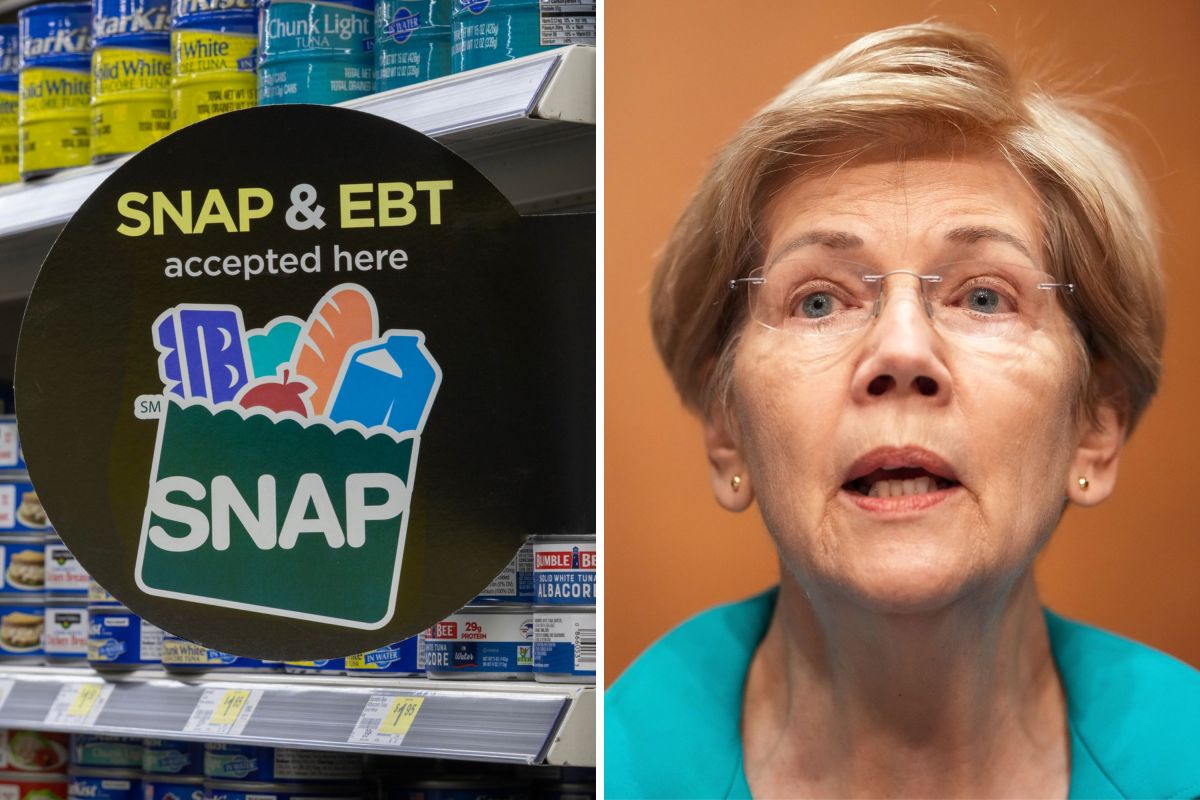
How Much SNAP Benefits Cuts Could Cost Your State: ‘Existential Crisis’
Senator Elizabeth Warren has warned that states are about to face an “existential crisis” as a major shift in how the federal government funds the Supplemental Nutrition Assistance Program (SNAP) takes effect.
The Massachusetts Democrat wrote on X on Wednesday that states should not be forced to choose between funding SNAP and other services. Her warning refers to an imminent reduction in the federal government's contribution toward administering SNAP, from 50 percent of administrative costs to 25 percent.
"States are about to face an 'existential crisis' as the federal government slashes its share of SNAP funding from 50% to 25%," Warren wrote. "Families shouldn't have to choose between food and rent. States shouldn't have to choose between SNAP and schools. Congress must reverse these cuts."
Read More on U.S.
That change is only the first of two major SNAP funding changes contained in President Donald Trump's One Big Beautiful Bill Act (OBBBA), signed into law on July 4, 2025. Beginning next year, most states could also be required, for the first time, to pay a portion of the food benefits themselves, potentially moving billions of dollars in annual spending from Washington onto state budgets.
The changes form part of much broader reductions to federal SNAP spending. The nonpartisan Congressional Budget Office (CBO) projects that provisions in the 2025 reconciliation law, including recently expanded work requirements, benefit changes and the new state funding requirements, will reduce federal SNAP spending by some $211 billion through 2035.
Newsweek reached out to the U.S. Department of Agriculture (USDA) and Warren for comment via email.
What Are the New SNAP Cost Rules?
Until now, the federal government has paid 100 percent of SNAP food benefits, while states and Washington have split most program administration costs 50-50. But the OBBBA changes both arrangements.
Starting October 1, 2026, the beginning of fiscal year 2027, the federal government will pay just 25 percent of most state SNAP administrative expenses, leaving states responsible for 75 percent. The USDA estimates the change will shift about $16.9 billion in administrative spending to states between FY2027 and FY2031, or about $3.4 billion a year on average.
Then, generally beginning October 1, 2027, states will have to contribute toward SNAP benefits themselves if their payment error rate, which is the percentage of benefit dollars improperly overpaid or underpaid, is at least 6 percent.
States below six percent will pay nothing toward benefits. Those between 6 and 7.99 percent pay 5 percent; states between 8 and 9.99 percent pay 10 percent; and those at 10 percent or higher generally pay 15 percent. For the first year, states can use the lower of their 2025 or 2026 error rates. Special delays apply to states with exceptionally high error rates of at least 13.33 percent.
A Senate Agriculture Committee farm bill proposal would postpone the benefit cost-sharing requirement by one year, but the committee had not advanced that bill to the full Senate as of late August. Under current law, October 1, 2027, remains the general starting date.
How Much Could States Have to Pay?
Analysis from the Center on Budget and Policy Priorities (CBPP), a left-leaning think tank, uses USDA's 2025 error rates and recent benefit spending to estimate what states could owe in FY2028.
It found that 35 states and one U.S. territory could face benefit costs, altogether shifting roughly $9 billion from the federal government to states in that year alone. Nearly half of states could owe $100 million or more.
The states facing the largest projected bills include:
The figures are estimates rather than final bills: states can use a lower fiscal year 2026 error rate for the first year, and actual costs will also depend on how much SNAP spending occurs in fiscal year 2028.
Some states with particularly high 2025 error rates, including Alaska, Delaware, Georgia, Illinois, New Mexico and Oregon, currently qualify for a delay rather than immediately paying the 15 percent share.
Republicans Say States Need More Accountability
The Trump administration and congressional Republicans argue the changes will give states a financial incentive to reduce improper payments.
The USDA reported a national SNAP payment error rate of 10.62 percent in FY2025, representing about $10.1 billion in combined overpayments and underpayments. The USDA's payment error rate is not solely a measure of fraud. The department says it measures errors in eligibility and benefit calculations and includes both households receiving too much and eligible households receiving too little.
Agriculture Secretary Brooke Rollins said the figures showed that state accountability was “severely lacking” and said the administration wanted states to curb waste.
Senate Agriculture Committee Chairman John Boozman, an Arkansas Republican, similarly said the reforms were intended to promote accountability for “significant mismanagement” while protecting taxpayer money.
House Agriculture Committee Chairman Glenn Thompson, a Pennsylvania Republican, said in June that states needed more “skin in the game,” arguing they would be more careful when some of their own money was at stake.
States Warn of Pressure on Budgets
Meanwhile, governors and state officials have warned that the new expenses could force difficult spending decisions.
The National Governors Association, together with groups representing state legislatures, counties and cities, warned earlier this year that the cost changes could threaten the “viability of the program.” The coalition urged Congress to delay the new funding requirements while states adjust their systems and improve payment accuracy.
In New York, Democratic Governor Kathy Hochul's administration has estimated the state and local governments could face as much as $1.4 billion in new SNAP costs annually, including about $1.2 billion toward benefits and more than $200 million in additional administrative expenses shared by the state, New York City and counties.
California's nonpartisan State Auditor has calculated that the law could add more than $1.8 billion in benefit expenses and $600 million in administrative costs, approaching $2.5 billion in additional annual costs. The auditor also warned the new expenses could seriously hinder California's budget balancing.
The CBO said it expects each state to respond differently, with some absorbing the additional SNAP costs, while others may change eligibility or benefits, or even leave the program, rather than fully replace the lost federal funding.