


 Maine
Latest Coverage
See all articles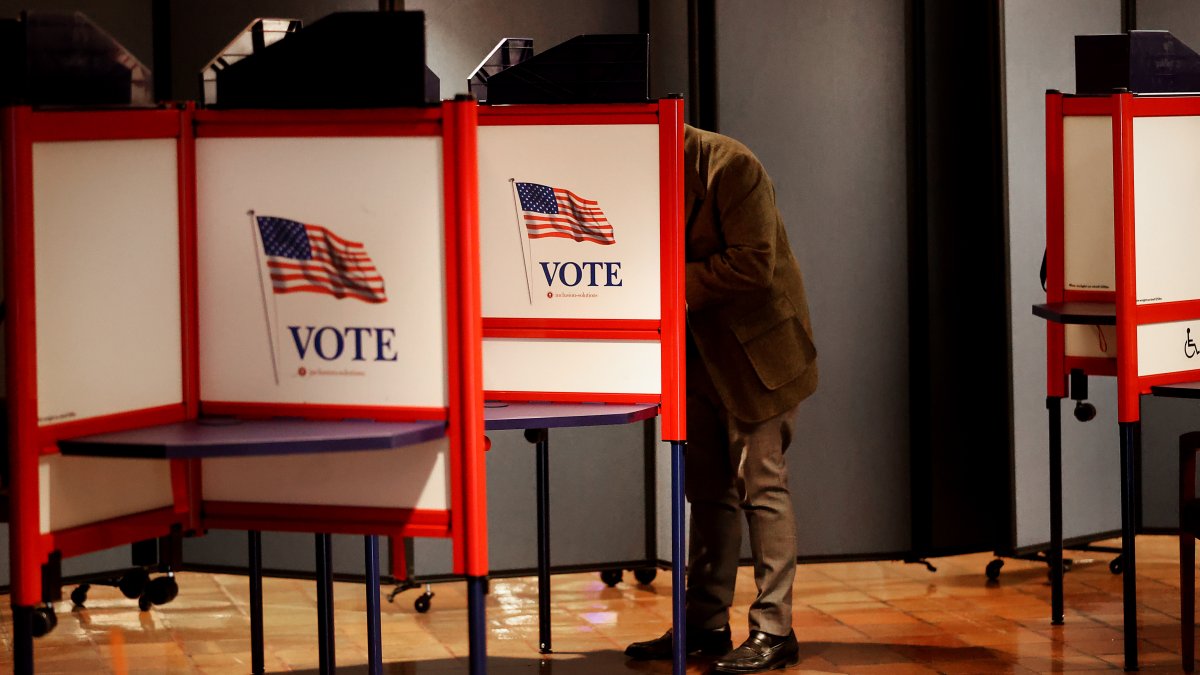
What's at stake in all 6 New England states on Election Day?
All eyes are on New England as voters prepare to head to the polls Tuesday. High-stakes U.S. Senate and governor's races, along with controversial ballot questions, could have far-reaching consequences. And the Senate battles in New Hampshire and Maine are drawing national attention, as they could help determine the balance of power in Congress.
Polls close at 8 p.m. in Massachusetts, Rhode Island, Maine and Connecticut and at 7 p.m. in Vermont. In New Hampshire, polls close at different times in different parts of the state, at 7 p.m., 7:30 p.m. and 8 p.m. In some towns with only a handful of residents, polls open at midnight on Election Day and close a few minutes later once all voters have cast a ballot.
Stream NBC10 Boston news for free, 24/7, wherever you are.
Here's a closer look at what's on the ballot in all six New England states:
Maine voters could determine control of the Senate on Tuesday when they either reelect Republican Sen. Susan Collins to a record sixth term or replace her with Democrat Troy Jackson. Also on the ballot are open-seat races to replace term-limited Democratic Gov. Janet Mills and retiring Democratic Rep. Jared Golden.
Republicans hold a 53-47 Senate majority, and defeating Collins is a key stepping stone for Democrats to pick up the four additional seats they need to retake the chamber. Republicans also hold a slim House majority, and flipping Golden’s seat would help blunt possible Democratic gains elsewhere in what’s expected to be a difficult midterm environment for the GOP.
Collins, the only Senate Republican to represent a state that former Democratic Vice President Kamala Harris carried in 2024, has been considered one of the chamber’s most vulnerable GOP incumbents in all five of her reelection campaigns. The 51% of the vote she received in her 2020 reelection bid was her poorest showing since the 49% she received in her first successful run in 1996. But despite Maine’s blue streak in presidential elections, Collins’ Democratic opponents have never surpassed the 44% mark in her five previous races. If reelected, Collins would become the state’s longest serving U.S. senator in May 2027.
Jackson is a former logger and former Republican who went on to serve as president of the state Senate as a Democrat. After an unsuccessful run for the Democratic nomination for governor, he was chosen by delegates at a state convention in July to replace Graham Platner as the Democratic nominee to challenge Collins. Platner easily won the June primary but was dogged by controversies surrounding a tattoo he once had that was recognized as a Nazi symbol and a sexual assault allegation he has denied. He withdrew from the race in early July.
Despite Jackson’s late entry into race, he has far outraised Collins since July, putting him slightly ahead of Collins’ total haul for the entire cycle. Both candidates have also received significant support from outside groups, including more than $30 million in ad spending on behalf of Collins from the super PAC affiliated with Republican Senate Majority Leader John Thune. With outside spending factored in, pro-Collins forces have outspent pro-Jackson forces in advertising since Sept. 1, $65 million to $55 million, according to AdImpact.
In the 2nd Congressional District, Golden’s announcement in November that he would not seek a fifth term gives Republicans a key pickup opportunity. Trump won the district in 2024, along with its one electoral vote. Maine is one of two states that allocates some of its presidential electoral votes by congressional district.
Democratic state Auditor Matt Dunlap will face former two-term Republican Gov. Paul LePage for the seat. LePage has slightly outraised Dunlap, although the Democrat has remained competitive.
In the race for governor, Democrat Hannah Pingree and Republican Bobby Charles are the major party nominees to succeed Mills. Pingree is a former state House Speaker and daughter of Democratic Rep. Chellie Pingree, who represents Maine’s 1st District. Charles is a former U.S. State Department official. Independent state Sen. Rick Bennett is also on the ballot. He previously served as state Senate president as a Republican.
The governor’s office in Maine frequently changes party hands. The state hasn’t elected consecutive governors from the same party in 74 years.
Maine uses a ranked choice voting system in general elections for federal office. General elections for governor and the state legislature do not use ranked choice voting. Under the system, voters rank the candidates in order of preference. If no candidate receives a majority of first-place votes, the last-place candidate is dropped, and votes cast for that candidate are reallocated among the rest of the field according to the preferences of the dropped candidate’s voters. This process repeats until one candidate emerges with a majority of votes.
Although the races for Senate and the 2nd Congressional District each have only two candidates listed on the ballot, both contests are subject to ranked choice voting because of declared write-in candidates.
Maine is divided into 16 counties, but elections are run by the state’s hundreds of cities and towns, a practice common in New England. Portland is by far Maine’s most populous city and forms the heart of the state’s Democratic base. The two congressional districts largely track with the state’s political demographics. The 1st Congressional District along the Southern Maine Coast is heavily Democratic, while the massive 2nd District to the north includes the bulk of the smaller, more rural areas where Trump performed best in 2024.
New Hampshire voters are deciding whether to elevate a Republican to a Senate seat that’s been held by a Democrat for a decade and a half. They’re also choosing two House members, and the governor’s race will help determine whether Republicans maintain their “trifecta” hold on the governorship and both chambers of the Legislature.
The “Live Free or Die” state, where voters are known for their independent-mindedness, is one of several states that could determine whether Democrats will wrest control of the U.S. Senate from Republicans in the midterm elections. The seat is open after Democratic Sen. Jeanne Shaheen, who was first elected to the Senate in 2008 and previously served as governor, announced in 2025 that she would not seek a fourth term.
Among those vying to take over Shaheen’s seat is Chris Pappas, a Democrat who has represented New Hampshire in the U.S. House since 2019. Pappas would be the first openly gay U.S. senator if elected. He is opposed by John E. Sununu, a Republican who has served in both chambers of Congress and was ousted from the Senate by Shaheen in the 2008 election. Sununu may benefit from name recognition in the race as he is from a storied political family; his father and brother were governors of the state.
Pappas has far outraised Sununu, amassing a war chest of over $23.7 million compared with the Republican’s $5.7 million as of mid-October. But tens of millions more in outside spending have poured into the race, with outside groups spending more to oppose Pappas than Sununu. Housing costs have risen rapidly in the state in recent years, and both candidates have made affordability a central issue of their campaigns.
Both candidates have also distanced themselves from their own political parties. While President Donald Trump endorsed Sununu in February, the Republican candidate has sought to distance himself in recent weeks from the president, whose plunging approval rating could represent a liability in a race that increasingly appears to be a referendum on the presidency. Pappas, a moderate Democrat who defeated a progressive challenger in the primary, has similarly tried to emphasize his independence from some of the party’s establishment figures, highlighting instead his appeal to independent voters.
In New Hampshire’s 1st Congressional District, Stefany Shaheen, a Democrat and the out