


 South Carolina
Latest Coverage
See all articles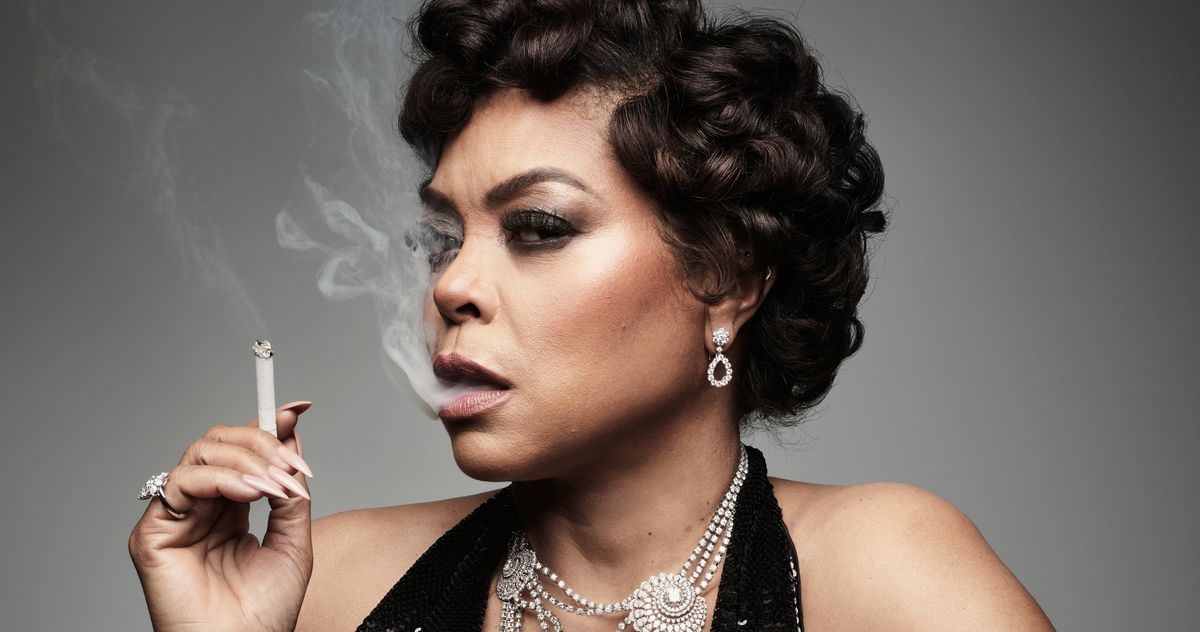
Taraji P. Henson Tells It Like It Is
For the past 25 years, Taraji P. Henson has specialized in a specific type of character. She is usually a mother, or mother figure, facing a crisis. She may be tough, but she has a redeeming effect on others — whether they’re a philandering man-child (Baby Boy), an adoptee aging in reverse (The Curious Case of Benjamin Button), or a trio of feuding record-label scions (Empire). She is “the moral compass,” the 55-year-old actress told me in April while making her Broadway debut as Bertha Holly, the big-hearted matriarch in Debbie Allen’s revival of Joe Turner’s Come and Gone, by August Wilson. Bertha runs a Pittsburgh boardinghouse with her husband, Seth, played by Cedric the Entertainer, in 1911 and is part of an ensemble of Black characters a generation removed from enslavement. The couple takes in a boarder, Herald Loomis, whose search for his missing wife draws the house into a reckoning with forces — both human and supernatural — that haunt everyone who is rooming there.
It is Henson’s saintliest iteration of the mothering archetype to date. The actress doesn’t feel typecast — rather, she sees her ability to reflect real-life nurturing women whom she loves as a valuable calling card. Steady work and good pay have been top of mind for Henson since she originally chose Hollywood over Broadway after finishing drama school at Howard University in 1995 with her then-toddler son, Marcell, in tow. She found the movie and TV industries to be cynical places. She racked up accolades — a Golden Globe and nominations for four Emmys and an Oscar — but her earnings stagnated. She had to fight for amenities her white peers got automatically. On the set of Empire, Henson pleaded for a trailer that wasn’t infested with bugs. When she booked The Color Purple in 2022, she said she her rate hadn’t changed in five years.
Now that Henson is taking curtain calls at the Barrymore Theatre, you get the sense that being onstage represents a much-needed reprieve from Tinseltown politics for her. (Though maybe not for long: A Joe Turner movie adaptation could soon be in the works — part of why Henson wanted to be in the play to begin with.) During our wide-ranging conversation, Henson was as brassy and expressive in person as she is in her work: “Am I being sensitive? I’m an artist. Fuck you. Yeah, I’m sensitive.”
At last night’s show, people were laughing at inappropriate times and multiple phones went off. Debbie Allen was so annoyed by the interruptions that she went on the PA speaker at intermission to tell the audience members they were embarrassing themselves. Was it distracting for you?
Theater is not for punks, okay? Theater is for the strong. You have to have discipline. I love that it’s a living organism. You can’t do theater and forget the audience. That’s why every show is different. You’ve got to work through it. That cell phone ringing might make me throw my line. But I got to stay in character.
Does Allen do a postshow debrief to go over what went well and what didn’t?
Oh, now listen, when the show is over, she’s waiting in the wings as we’re going to our dressing rooms, and she’s hugging us like, “Great show!” But then she’ll come to your room individually and give notes. It’s not a big thing unless we fuck the whole show up. Then she’s like, “Bitch, y’all coming in at one o’clock tomorrow!” That did happen earlier on in a preview.
Is there any variation from one performance to the next?
There may be little things, but I can’t do something so crazy that it throws my scene partner. But as long as it makes sense. One day out of the blue, I walked past Tripp Taylor, who plays the boarder Jeremy, and I popped him on the back of his head. That was just me listening to my instinct and being in the moment and honest. And it worked because it’s connecting the dots to something I said in my monologue: “Jeremy ain’t got enough to him for you.” Bertha knows! The boy is dumb and full of cum.
Were you familiar with previous productions of Joe Turner?
I never do that. I didn’t do it when I played Miss Hannigan in the 2021 live version of Annie, I didn’t watch the old Color Purple before I went to make it. Part of it is I’m a comedian, so I mimic really well — I know that about me — so I will not watch because it has to be mine. Why do I need to pay attention to what was theirs? That has nothing to do with me.
How much period research was required to pull off this role?
Well, I didn’t know what a damn juba was. But the thing about Debbie — and this is what I love about that Howard University training, if I may gloat a little bit — is she came with, like, 60 pages of research: the date of birth of each character, what was going on the year they were born, what was going on from their birth until we all meet in this boardinghouse. You have to do that research because there are times in the script where, if I’m coming down the steps and tell Seth to get his ass upstairs to help me flip this mattress over and he doesn’t come, my instinct might be to be like, “Hey, you didn’t come! I don’t give a fuck who at the door!” But that’s a today woman. Back then, she couldn’t.
What is it like working with Cedric?
This is not my first time playing his wife. We were in this film Larry Crowne with Tom Hanks and Julia Roberts where we played a quirky little couple — not as much depth as Joe Turner. When Debbie called and told me that Cedric was playing Seth, I was like, Oh, well, the chemistry’s there. That’s easy. And so what we do is we have fun. We trust each other. We got in trouble so much in rehearsal. You got to remember we’re coming from film and TV, where they spoil us. Debbie had a “no visitors” policy, so we couldn’t bring our assistants. So me and Cedric are over here on our devices trying to order our own lunch, like, “You remember how to do things for yourself?” Like, we really are that bougie.
Obviously, you’re top-billed, and your and Cedric’s names are the big draws of the production, but it’s an ensemble piece. Do you think about this play in terms of starring and supporting roles?
I’m a piece of a puzzle. I know Bertha is the glue — you love her when you see her; you miss her when she’s gone. Just like I know exactly why I got picked for Benjamin Button. Cookie in Empire was a different kind of glue, but the glue nonetheless, and still the moral compass. I know that’s what I do. I’ve had people come to the show and they’re like, “There’s that big ending where Herald has the knife, but I kept looking over to you. Because you’re the North Star.”
Has your approach to playing this kind of character changed over the years?
I don’t think I approach it any differently. I’m a Virgo. I can’t tell a lie in real life. Don’t tell me where the body’s buried because when they interrogate me, my lip is going to tremble or sweat; my eyes will do everything they’re not supposed to do. I’ve always been told I’m the truth. And I think that’s because that’s how I live my life. I want to get to the truth, to know your truth, and not be afraid of your truth.
What does truth mean to you in the context of performing a character?
In August Wilson’s writing, there’s not a lot of stage direction. And it has a certain vernacular that you can’t switch out. The way his words are flowing is melodic — it’s almost like Shakespeare. You got to settle down and listen for a minute. Then go, Okay, it’s a different way of speaking. I don’t talk like that. But I have to understand what Bertha really means in a way that makes the audience go, “I understand exactly what she’s saying.” The reason Bertha is so taken by Loomis’s baby girl is because she and Seth have been married 27 years but have no children. What’s that about? As an actor, I have to ground that in some kind of truth so it doesn’t look like I’m a creep looking at this little girl.
What convinced you that now was the time to make your Broadway debut?
Before, I didn’t have the space on my schedule. Also, it’s Debbie Allen. I’m no fool. I know they’re making the film. That’s how they got me. Debbie was like, “We going to do the film, but child, we got to do this play first.” I had actually spoken to Todd Black before about being in one of the August Wilson movies he was producing because we were producing something together at the time. He was like, “Tell me which character, which play.” And we both got busy.
You have a long-standing relationship with Debbie.
When I was at Howard I was pregnant and didn’t know how I was going to finish my junior year. Debbie and Phylicia had created this scholarship in honor of their father, the Dr. Andrew Allen Sr. “Triple Threat” Memorial scholarship — you had to sing, dance, act. At six months pregnant I won the scholarship. That was the beginning of our relationship.
Then I get to L.A. in 1996, and later on my first television series as a regular, Lifetime’s The Division, Debbie plays my lesbian mother. Then I’m working and chugging along. Later on, she comes onto Empire to direct, and Phylicia plays my archnemesis for a season. Oh, and also Phylicia gave me my honorary doctorate at Howard. So they’ve been woven in — a part of my beginning, middle, and where I’m going.
How did you balance the beginnings of your career with being a young single mother? I assume a lot of tough trade-offs were involved.
It was a lot. But God had his hand in everything. Every job that I got while Marcell was young was at home in L.A., including Baby Boy. I never had a nanny. I couldn’t afford it, but I always had friends or a babysitter who would watch him until I got home. And I cooked every meal. No fast food, none of that bullshit. One day in high school, he was like, “Mom, I just want to thank you because I know you’re doing this by yourself. And I go to school” — a very privileged school— “and these kids have both of their parents, they have way more money than us, and you know what they eat for breakfast? Cheetos and Snickers bars.”
Why were home-cooked meals so important to you?
My mother didn’t raise me on no damn cereal. I had egg sandwiches. And when she sent me South to my grandmother in North Carolina for the summers — that’s why I can play these southern women — she would get up at 5 a.m. and cook my grandfather breakfast before he went to work. I watched this as a little girl. So that’s in me. And it’s not, “Oh, you’re a great mother” or I get a gold star. That’s what you fucking do. How do you expect your kid to go to school and learn if you don’t give them nutrients?
What were those childhood summers in North Carolina like compared to D.C.?
When I say you could smell the hogs in the wind … When the sun went down, you couldn’t see your hand in front of your face. No streetlights. Small little town. A lot of space and time for me to be creative in my mind. This was probably from age 6 to around 12.
That’s how you got into acting?
Well, how I got there is because me and my best friend saw this movie Fame and we wanted to go to a high school like that, and in Washington, D.C., that was Duke Ellington School of the Arts. My best friend got accepted. I did not. I was crushed. We are still best friends to this day. But when you’re young like that, you don’t understand that rejection. You really think, Oh, that must mean I can’t act or I don’t belong there.
I read that you originally went to North Carolina A&T State University to study electrical engineering.
So I started hanging out with the nerds, and I thought I was mathematically inclined — I don’t know where the fuck that came from, but I went with it. It was a character, I guess. But I knew I didn’t want to be broke, and it sounded like electrical engineers make a lot of money. It was a detour. I followed one of my friends, who is brilliant, and she’s doing what she’s supposed to be doing in that field, but I felt like I wasn’t even supposed to be there. I called my dad crying. And he was like, “That’s right, nigga” — because he called everybody “nigga” — “you don’t need to be down there. Your ass need to be up here at Howard University studying that acting.” I thought he was going to be so disappointed in me. But that was the way he taught. He never said, “Go this way.” It was, “Either go that way or this way. Your choice.”
What your dad did was a gift, in a way — allowing you to make your own mistakes and find your own path.
Yeah, and I’m glad it happened that way because when I came back to the arts, nothing was stopping me. But I needed to build my confidence back up. Even when I was at A&T, I would pass the theater-arts department with my face pressed against the glass every day knowing that’s where I belonged. I remember they announced an audition for a play, and I was like, Fuck it—just do it. My roommates and all my other math friends didn’t know. I just ran off to the library and found a book of monologues. And I remember standing up there — my hands were shaking and I was sweating bullets and I don’t even know how the words came out. Cut to the next day, when I knew they were going to post who got callbacks. I never went to see. I ran back to safety and pretended it never happened. That’s what fear does.
But you knew engineering wasn’t your calling.
I failed pre-calc. I had two fucking tutors I would go to four days a week. What the hell was I thinking? I had never failed at anything in my life. But God was like, “Watch this.” And so that’s when I called my dad.
And it sounds like your family was supportive of your artistic ambitions.
Well, my mother was afraid. “Oh, you going to be a starving actress, Lord Jesus.” But you got to remember, her father was a sharecropper, and they lived on what was basically a plantation. The entire family picked cotton for the summer to earn money, and they were only earning $300. My father was born in Washington, D.C. He went to private schools. My grandparents had money. My godmother and my auntie studied ballet at private schools. So he was allowed to dream. My mother migrated North from the South. Of her siblings, only three stayed behind. The rest went North, and she met my dad. Oh, that’s crazy. I just put that together right here with you, Zak! I knew it, but I didn’t draw the connection with the play. My father would’ve been like Seth: “I ain’t picking no cotton. I never even seen no cotton.” He would’ve been a Washingtonian.
How did they meet?
I have no idea. Two different worlds, obviously.
I know your dad suffered from PTSD from being a Vietnam War veteran. You now have a mental-health foundation named after him. What was that dynamic like growing up?
It was like Herald Loomis. My dad would have similar episodes. Oh, Jesus, this is hitting me because in the play, when Loomis is saying good-bye to that little girl, I’ve had so many situations like that with my dad when he had to go away and get sober. Or one time he was trying a different way and he left and went to Canada to join a yoga camp. But even though he was troubled, he loved me. And I had a daddy — a lot of kids didn’t know theirs or didn’t have one. Even when he was homeless and he was living in his van, he would come to visit me at school. I didn’t care about that shit. All I knew is I have a daddy and he is here to look me in my eyes and tell me he loves me. And he always kept it real with me. “I’m in a bad place right now, but I’m going to get myself together.” Now, was I traumatized by his episodes and everything? Absolutely. It’s probably what makes me the actress that I am.
How so?
Managing and pretending and damage control and feeling and crying. And for all that drama, you know, you either become it or you take it, flip it, reverse it, and use it in a good way. Because we all been through shit.
What kind of episodes was he having?
People were robbing apartments back then, and I think our cat heard something going on and ran into the blinds to alert the family. My dad jumped up and grabbed the post from the bed and thought immediately that it was a bomb or something. He was grabbing my stepmother. She had to calm him down. I don’t know how many of those he had. I was always in another room when we were sleeping, and I was only with him on weekends. But let me be clear. It wasn’t like he was having these episodes all the time. He would have his moments where he would be depressed, and he had the problem with the bottle, but eventually he got saved and he stopped drinking and smoking cigarettes. That’s why it hurt when he died, in 2006, because the good times were great. And we had more good times than bad. When someone’s struggling but they’re just having a moment, you got to love them through those moments.
I totally understand. And you were close with your grandmother, too —your mother’s mother, Patsie Ballard. She was your Oscar date when you got nominated for Benjamin Button.
She just turned 102, and she’s coming to see the play.
That’s incredible.
She was born in 1924. It just blows my mind. Think about where they come from. They weren’t allowed to dream. When I would go down to stay with her, she allowed me to dream and create and come up with all these different characters and trust my instrument and sing that song in the mirror. I had nobody to play with. That’s why I could play all these characters. Because all I had was time. So I had to bring her to the Oscars.
Your feature-film breakthrough was the late John Singleton’s Baby Boy in 2001. You played singer-turned-actor Tyrese Gibson’s girlfriend Yvette. Can you tell me about how working with Singleton set your expectations for what it was like to be in Hollywood films?
He was very clear about what he wanted to do with the film. The first thing he said to me and Tyrese was, “Y’all’s relationship has to be palpable. It has to be like Diana Ross and Billy Dee.” He wasn’t interested in doing a crossover film. He was like, “This is a movie for us, by us. And what I’m trying to do is make a movie that people can watch 17 times.” Did he not do it?
That’s what I loved about him. That’s what I miss about him. Because he was the truth. I remember executives trying to slice and dice his film, and he would cuss them out so bad. I’ve never seen anyone talking to them like that. But he got shit done and they trusted him. He knew what he was talking about.
After Baby Boy, you had friends and people you knew who saw it and were like, “Oh, your career is about to blow up.” And you were skeptical.
I think early on I just knew that it was different for men and women. It was blatant. Especially when I was coming up in the business. It was like, only one, and then y’all. You know what I’m saying?
And you were vindicated in a sense because Tyrese went on to book the Fast & Furious franchise pretty soon after.
I’m not going “Woe is me.” But was I not right? I just was keeping my feet rooted in the ground. If I listened to everybody else, child, I’d probably be living in the bottle somewhere.
You’ve been pretty open about wanting to book a franchise. What do franchises signify to you in today’s Hollywood? Is it validation of the cachet you bring to movies? A marker of a specific kind of success? Financial stability because you’re going to get that sequel?
Absolutely. But I don’t want a franchise movie just to have a fucking franchise movie. Give me something good. Give me something I look forward to. I want my villain. Do I not deserve that? Does my audience not want to see me in that?
You seem to have a very specific sense of your audience.
Audience is something I’ve earned. I’m glad I’m doing Broadway now because this is a testament of all of the work that I’ve been doing. This is a destination. This is not, “Oh, check her movie out at your local theater,” or “Her movie’s about to drop on Peacock or Netflix.” You got to get on a plane, you got to drive, train, bus, horse, I don’t know, to come here. And they’re doing it because of the trust that the audience has. They know if Taraji P. Henson’s name is on it, they are going to get some feels. That’s my frustration with the business side of Hollywood. They like to jump on what’s hot. Bitch, I’ve been hot! I stay hot!
But now I’m in a position where I have a production company, so I can create it. That’s my message to the kids. You don’t want to be in the needy, give-me-give-me position, waiting for some shit to happen. You want to be Issa Rae. You want to be Quinta Brunson, where you make Hollywood come to you. Y’all need to start thinking like that instead of “I want to be an actor.” That’s the weakest link in the chain. Don’t ever just want to be an actor.
I imagine part of the challenge there is that the business side and the artistic side require different skill sets.
It’s far from easy trying to get people to see your vision. It’s almost like starting over again as an actress.
You have to reprove yourself in a different capacity.
I’m learning a lot. It just hurts because no one’s going to buy everything you have, but they’re all my kids. You don’t love all my kids? And I think I get caught up sometimes in the why. What did they not see about this? Why aren’t they getting what this is?
Did seeing Singleton confront executives in such an uncompromising way give you permission, on some level, to be outspoken about the labor issues you’ve experienced?
Absolutely. Because if you don’t speak up, how will things change? I’m not being mean. I’m not putting anyone down. I’m just telling you my truth. Why should I be quiet about it? Because it makes you uncomfortable, because the shit’s fucked up? Then we need to be having this conversation.
Pay disparities you’ve faced compared to your white peers is a big one you’ve brought up several times in the past.
Lemme just kill that, because I hate what the Guardian did. That was a beautiful interview, and they made it about pay disparity. I’m not even talking about that anymore. I’m getting my money because I spoke up. They heard me loud and clear. So let’s just say that I don’t want this to turn into a whole “woe is me.” I’m getting paid. But when you have something creative, that’s your baby. You know how Erykah Badu said, “I’m an artist and I’m sensitive about my shit”? I’m coming from that space.
Are you actively involved in negotiating your contract terms? Were you always?
No, I had to learn. These are things you pick up along the way. If you get nominated and have to campaign, that’s your precious time. You’ve already paid me for that job, and by the time the nominations come, it’s probably a year later and that money’s spent. So now I’m working for free. But as you grow and climb that ladder, you learn. You start hanging around other like-minded people, people that know more that can teach you.
Was this something an agent should’ve done for you?
Absolutely. It’s all about your team. That’s another thing you learn. Are you in the room fighting for me? Why does this number keep coming back? What are you doing? You’re not standing up for me. Even my business manager said, “You flip your team until it works, including me — if I got to go, do what you got to do to make it work.” A lot of these babies have bum agents that lowball them.
How do you find out you’ve been lowballed?
You do research, you talk, you hear people dropping numbers, such-and-such got paid for this. Everything becomes a splashy headline. So it is hard to hide what anybody’s getting paid anymore.
And you’re satisfied with where you are now?
Yeah.
So instead of a franchise after Baby Boy, you were cast in Hustle & Flow, which was co-produced by Singleton and written and directed by his protégé, Craig Brewer. You played Shug, a pregnant prostitute who develops a romantic relationship with her pimp, played by Terrence Howard, as he embarks on a musical career. The movie also featured a history-making song, “It’s Hard Out Here for a Pimp.” And you sang on it.
I had to prove to them that I could sing. I wasn’t singing back then, but I was like, “A hook to a rap song? I could sing this.” And John was like, “No, we going to get somebody else,” and I was like, “John …” So I went and spent my own money and recorded myself in the studio with a piano singing “Summertime.” Then I met John in the parking lot of Roscoe’s, and I popped in the CD and was like, “Listen to this.” And he was like, “Well” — he had chicken grease all on his face and shit — and he said, “Who is that?” And I was like, “That’s me.” He was like, “That’s you? Oh no, you singing.” I was like, “That’s what I’ve been trying to tell you!”
And now you’re on the second rap song to win Best Original Song at the Oscars.
I don’t know what Hollywood’s not getting about me. Are they stupid?
How was working with David Fincher on Benjamin Button after that? He has a reputation for doing a lot of takes and being very exacting and specific to an unusual degree.
That didn’t bother me because I’m a Virgo, so I’m kind of like that.
Particular?
For sure. I had a great time with it. I love that character.
You were nominated for lots of awards for playing Queenie, the woman who adopts Brad Pitt’s character, including Best Supporting Actress at the 2009 Oscars. Any particular memories of the awards circuit?
My first time at the Oscars when I was nominated, I sat next to Brad and Angelina Jolie, and during the commercial breaks, we were at the bar doing shots. Same with the Golden Globes — we were passing drinks underneath the table. Just put it this way: Anywhere I go, I’m going to have fun.
You were obviously in rare company as one of the small percentage of Black actors ever nominated for an Oscar. Did you hear from any past nominees congratulating you?
I got all kinds of flowers. I think Will and Jada Pinkett Smith sent me some. I can’t even remember everybody who sent them. Big, big flowers. I was like, Ooh, I must have made it. Now I don’t get the flowers from 1-800-flowers no more.
A lot of attention has been paid recently to the politics of Oscar campaigning. What was that experience like for you?
I’ve only been nominated once, but I remember feeling like I was on a political campaign.
In a good way or a bad way?
In a bad way, because you saw the movie. What am I convincing you to do? Why am I doing this? I already did press for the movie. We released it. And then you don’t win.
You did this thing you didn’t want to do, and now it’s disappointing.
That don’t feel good and no, it’s not fun. “I’ve been nominated.” Fuck you. Who gets in the race and wants to lose? Make it make sense. That’s toying with my emotions. Am I being sensitive? I’m an artist. Fuck you. Yeah, I’m sensitive.
Was your takeaway that campaigning actually matters?
I don’t even know. I don’t understand it anymore. I thought I did, but I don’t.
What was your previous understanding?
That if you’re good, you win. Sometimes you would hear, “Oh, this person is owed.” “They dropped the ball for so many years, and they have to give it to this person.”
Did being nominated have a measurable effect on your career? Did you get a lot more offers afterward?
The first person who called me was Tyler Perry to offer me I Can Do Bad All by Myself. And then I got beat up in the press, asking why I did that after being nominated for an Oscar. Well, you tell me why the phone didn’t ring from anybody else you think I should be working with.
Right after that, I did Karate Kid. So when people ask me these questions, well, what should I have been doing? Because they didn’t call, sweetie. You think I turned it down? You think it’s that easy? If something great came along, I would obviously be doing it, because that’s what you’re supposed to do when you get nominated for an Oscar.
I Can Do Bad ended up being the first of three Perry films where you played the lead, the most recent being Netflix’s Straw last year. What’s he like to work with?
Usually when Tyler develops a character and he has me in mind, I can tell.
How so?
I can just tell in the writing, in the emotional moments. He sends me a lot of scripts and he knows I’m not going to say “yes” to everything. But when he has it, he’ll call me and be like, “I know I got something for you.” Like my character in Straw, who’s a single mom. We’re friends, and he knows life for a single mother ain’t no crystal stair. I know exactly what he’s trying to accomplish, and I just do it. We get each other.
What’s it like being directed by him?
He moves really fast and you have to be prepared. That’s all I can say. He knows what he’s looking for. He’ll get it in the first or second take. If he doesn’t, then he steps in and he starts directing, but he hires actors he knows can give what he needs. That’s why he’s such a huge part of the casting process.
There have been several news reports that the pace of Perry’s shoots puts a lot of undue strain on his crews. He also has a contentious relationship with labor unions. Was that strain visible to you on set? Have you discussed any of these reports with him at all, as someone who has been outspoken about the unfair politics of being on set?
No, I don’t have any conversations with him about that. If we’re not working on a movie together, we’re talking about real life stuff. You and your friend don’t talk about work all the time. And I don’t talk to him every day. That’s a very busy man.
Terrence Howard is another repeat collaborator you went on to work with closely again on Lee Daniels’s Empire, this time playing his estranged wife Cookie Lyon. What’s he like as a co-star?
Well, specifically the role of Lucious Lyon just had his name all over it. When I read the script, I was like, I can’t see myself doing this with anybody else. You don’t have to question it. It just makes all the sense in the world. In fact, I said I would only do this if you get him. They had somebody else in mind for it. And I was like, I’m not interested in that.
What was it about him? First of all, we had the chemistry from Hustle & Flow. Second, he is just different. He doesn’t have to act in that role.
How would you describe that quality? Is it audacity? Assertiveness?
He’s going to sell it to you, whether you know you’re being sold to or not. That’s Terrence. He talks about his light sculptures. Next thing you know, you want one. That character had to be bold to get out of their situation, because you are talking about people living in the hood. What separates you from all the other niggas? You have to be that bold. You have to be that audacious, right? That’s who Terrence is. And he’s a hell of an actor.
He also had a reputation as a hothead.
I didn’t experience that with him. In fact, they called me “the Terrence Whisperer.” He listened to me. I’d be like, “Terrence, would you come on? Ain’t nobody got time for this. I’m trying to go home today.” I was Cookie. Literally. That’s how it was on that set.
So none of the negative press circling around him manifested as a problem in your working relationship?
Not at all. I mean, people look for splashy headlines. But we lasted six seasons and the only reason why we got shut down was because of COVID.
What was it like being on a show that was so culturally dominant — on TV and on social media?
It was fun culturally. It let us know we did something. We shifted the paradigm. We shifted how people saw a woman like Cookie. ’Cause any other time, she would’ve been seen as just a loud, Black, sassy bitch, right? Cookie made it cool to speak your mind and be you and be from the dirt and make something of yourself. That’s why the world loves Cardi B. She lived out loud. She didn’t hide shit. Ain’t nobody perfect. You can’t inspire me if you ain’t had no bumps and bruises.
I read a comment from Lee Daniels where he said making Empire was a miserable experience. And you’ve talked about having to fight Fox to get trailers on set that weren’t infested with bugs.
Now you’re triggering me.
Did you experience it as a difficult shoot besides those conflicts over amenities?
It would be hard when someone who didn’t understand the culture would come in and try to write or do something that just was wrong.
Can you give me some examples?
One season it was talked about that Cookie was going to be in a threesome with Lucious and his girlfriend Boo Boo Kitty. I said, “Hell the fuck no. That don’t make no sense.” Come to my trailer and make it make sense. I’m not going to do anything false. I can’t. I can’t, can’t, don’t know how to do it. My body won’t even act right. I don’t know what the hell that shit was. I just wasn’t doing it. We don’t need splashy bullshit. We got ’em. Keep staying with the truth.
And I hated that they got rid of Rhonda. I thought she was a strong character to keep. She was Andre’s wife. She had so much more at stake.
The show also started to become associated with what happened with Jussie Smollett and the allegations he made about being assaulted in Chicago. How did you experience that as his co-star on the show?
I mean, it hurt because it was family. And then to have people drag somebody who says, “I’m trying to tell you my truth and you’re telling me I’m lying”? That’s not a good place to be. Who fucking wants to go through that? But he’s good and the truth finally happened, so I don’t even want to dig it back up.
And that had nothing to do with Empire being canceled?
Literally someone had gotten COVID at a stage next to us. And we used the same extras and so one day we had 200-and-something extras and I was like, “Y’all do know somebody going to have COVID.” So they got nervous and just shut it down. We didn’t know what the hell was going on or what to think of this virus at the time.
Was there supposed to be a Cookie spinoff at some point?
We just couldn’t get it together. But I think she’s good where she is. There’s Cookie-like characters popping up everywhere. She did her job. She inspired. Moving on.
Your next big movie role was as the historic NASA mathematician Katherine Johnson in 2016’s Hidden Figures. What kind of research goes into playing real people?
The studio coordinated a visit for me to meet her, sit down and speak with her. I met her family. It was amazing.
Did you have any immediate impressions of her that you knew you wanted to incorporate into the character?
She was like a queen. The way she sat and carried herself. She was a woman of great presence without saying a word. A very proud woman. One thing I noticed was her passion to want people to love numbers the way she did. That’s why she taught. And when she talked about the days of working with all the women at NASA, she was very inclusive. It was never about her. She would always speak about “us.” What “we” did. Never what “I” did.
Did she like your portrayal?
She was 98 when the film came out, so she wasn’t as vocal as she was when I first met her. But the first thing I wanted to know was, “Did I do right?” I was speaking mainly to her family members, and they were saying — especially when it got to the scene where we did the marriage proposal with Mahershala Ali’s character, her daughter said she giggled in the theater, like, “You got Mama down!” The grandchildren were like, “You got her down to the way you were pushing your glasses up!”
Is that something you saw her do a lot when you met?
Not necessarily. I just know if you’re hot, if you’re under pressure, they move around all the time. And this woman — her vision was very important to her. So you can’t just throw ’em on your face and forget they’re there. And then come to find out she did it in real life. Of course she would.
Are there other historical figures you’re interested in playing in a movie?
Stephanie St. Clair. They call her Queenie — the godmother of Harlem — and she came before Bumpy Johnson, but her deal was she was running numbers. She was never into drugs. A script has been around for a while, but no one has been able to put it together, because of course when it comes to Black period pieces, we’re always going to get the pushback. “It’s too expensive, it’s too this, it’s too that.”