


 Rhode Island
Latest Coverage
See all articles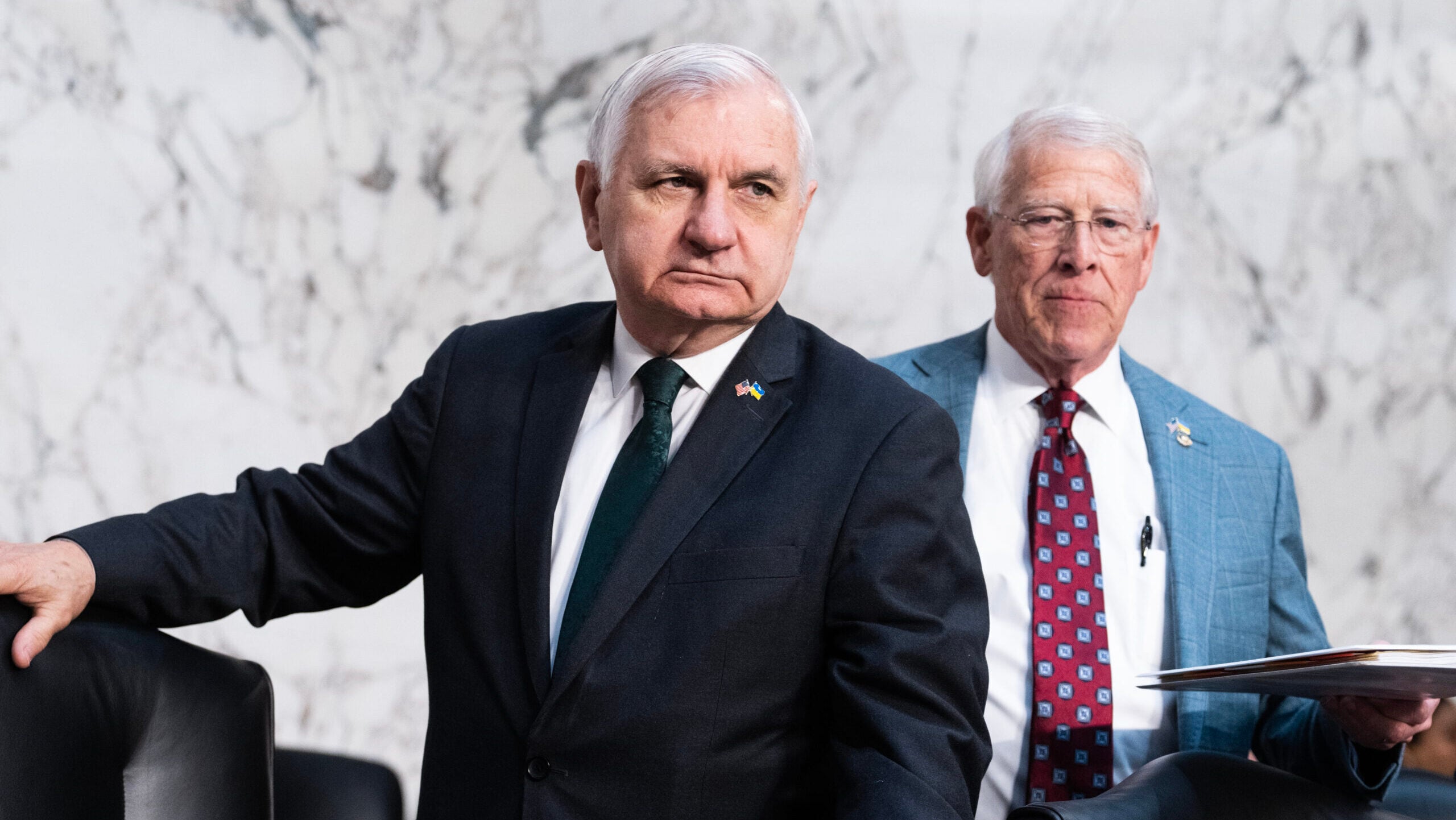
Senate Democrats block NDAA amid concerns on Iran War, budget topline
WASHINGTON — Senate Democrats today blocked the fiscal 2027 defense authorization act from moving to the Senate floor, impeding the trajectory of the typically bipartisan measure, due to opposition to the war in Iran and concerns about the growth in defense spending.
Senators voted 50-46 on party lines, failing to meet the 60-vote threshold needed to bring it to the floor.
Today’s vote marks the second time in two weeks that lawmakers have held up progress on the National Defense Authorization Act, which would greenlight about $1.14 trillion in funding for the Defense Department and make policy changes with implications for troop pay, drone operations and defense contractor earnings.
In the Senate, the NDAA turned into a referendum on the Iran war following President Donald Trump’s announcement on Monday that the conflict had recommenced — and that the administration believes it has another 60-day period where it can wage war without congressional authorization.
Another key concern is the high price tag of the FY27 budget request, which — if coupled with a further $350 billion in reconciliation spending requested by the Pentagon — would bring defense spending to a historic height of $1.5 trillion at the same time the Trump administration has made sweeping cuts to other government agencies.
Sen. Jack Reed, the top Democrat on the Senate Armed Services Committee, said both the war and the budget influenced his vote against proceeding with the NDAA, noting that Congress has yet to come up with a bipartisan deal that sets an agreed upon topline for defense and nondefense spending.
“I think the most practical step is to settle the budget issues, because we understand that this war is a multifaceted dynamic that’s very much more complicated than they initially thought,” he told Breaking Defense. “But I think if we have a solid resolution of the budget, both domestic and defense will be in a much better position to go ahead.”
“I think it’s the type of legislation that we can revive quickly when we have the opportunity and the stars align,” he added.
Sen. Angus King, I-Maine, a SASC member who voted for the bill in committee but voted against moving it to the floor today, said Republicans should negotiate with Democrats over the toplines for defense and nondefense budgets.
“Generally, there’s been some sort of parity. This time, the increase in defense is four times the increase on the domestic side,” he said.
“The other piece would be, let’s have a debate about the war. Let’s have the administration make the argument and tell us what it costs,” King added.
Sen. Tammy Duckworth, D-Ill., announced earlier today that she would vote against the NDAA unless her amendment — which would prohibit funds authorized in the bill from being used for the Iran war — was included.
“[Fifteen] of our servicemembers have been killed, billions of dollars have been wasted and our economy is in tatters,” she said in a statement. “The President wants to rebuild Iran before he rebuilds America, and it’s outrageous that Republicans are willing to roll over and let him.”
Ahead of the vote, SASC Chair Roger Wicker, R-Miss., told reporters that Senate Minority Leader Chuck Schumer’s efforts to block the bill represent a “new low.”
Late last month, a group of 14 Republicans joined Democrats to block the House’s version of the NDAA from moving to the floor of the lower chamber over disagreements about how the SAVE America Act was set to be bundled with the NDAA.
House Armed Services Committee Chairman Mike Rogers, R-Ala., told Punchbowl News today that the House could attempt to take up its version of the NDAA next week before lawmakers leave Washington for August recess.
‘Do The Right Thing’
Tensions over the fate of the NDAA bubbled up during a confirmation hearing held by the Senate Armed Services Committee earlier today, when Sen. Dan Sullivan, R-Alaska, urged his Democratic colleagues to push the NDAA forward and to support efforts to pass a $67 billion supplemental request to cover Defense Department expenses associated with Operation Epic Fury.
“Usually, we try — the serious senators on this committee try — to forego politics and focus on national security. And I hope there comes the supplemental, when it comes again on the NDAA today, that they do the right thing,” Sullivan said. “That would be voting on these things, or at least considering them.”
King countered, “If the war had been authorized, it would be a different discussion.”
Throughout the hearing, Democrats expressed frustration when Jay Hurst, who is nominated to be the Pentagon’s comptroller, repeatedly declined to answer questions about the cost of the Iran war, the makeup of the supplemental request, or the status of about $152 billion in defense funds approved as part as last year’s One Big Beautiful Bill.
Hurst, who was originally confirmed as the assistant secretary of the Army for manpower and reserve affairs, performed the duties of the Pentagon’s comptroller until May 20, when he was nominated for the job on a permanent basis. Michael Powers is currently the Pentagon’s acting comptroller.
During his time as acting comptroller, Hurst was a regular fixture on Capitol Hill, briefing lawmakers on the fiscal 2027 budget request and spending on Iran operations. But today he said that since he hasn’t been in the comptroller post for the last few months, he didn’t have up to date information.
“Mr. Hurst, I am unpersuaded by your professions of ignorance about the cost of he war,” King said. “And to sit here today and say, ‘Oh, I don’t know. I’m not in the position.’ Come on. You had to know this question was going to come up in this hearing today. How much has the Iran War cost the American people?”
Hurst responded by repeating a the $29 billion estimate he had given lawmakers in May.
“In preparing for this hearing, you didn’t ask any questions about updating that number?” King asked.
“I felt it would be inappropriate to do so because that’s not in my current role at the department,” Hurst said.
Hurst was also asked about progress in spending $152 billion in defense-related reconciliation dollars, with Reed stating that only $67.5 billion had been obligated as of earlier this month. In April, Defense Secretary Pete Hegseth said that $26 billion had been put on contract.
“While I’m not in the position of comptroller right now, and I can’t give you a current total, that figure alone suggests to me that the department is committed to obligating these funds,” Hurst said.