


 South Dakota
Latest Coverage
See all articles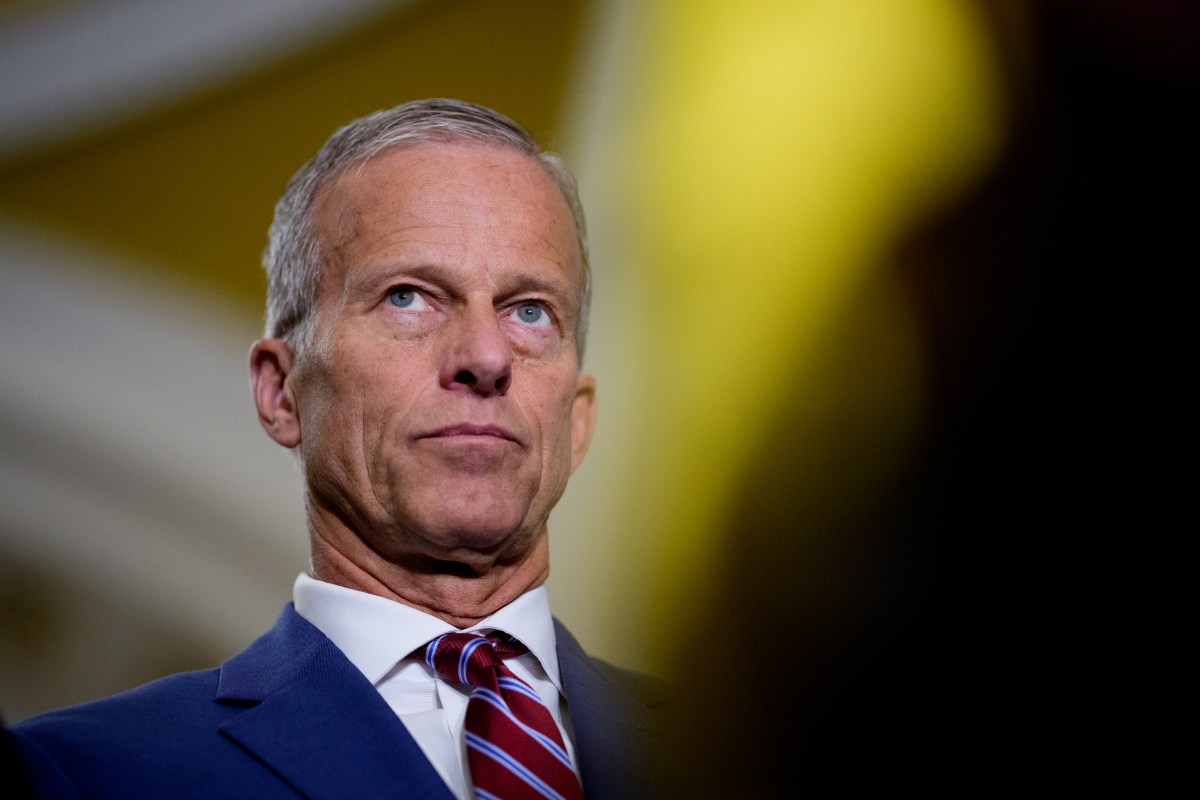
Top Republican John Thune Clashes With White House on SAVE Act: 'Get the Votes'
Senate Majority Leader John Thune fired back Thursday after White House press secretary Karoline Leavitt said President Donald Trump's patience was "running out" with Senate Republicans over the stalled SAVE Act.
"Maybe she or somebody else ought to get on the phone and get the votes. Right? It's 50 around here," the South Dakota Republican told reporters.
The exchange highlighted growing tensions between Senate Republican leadership and the White House as Trump intensifies pressure on Senate Republicans to advance one of his signature election priorities before lawmakers leave Washington for the August recess.
Read More on Politics
A White House official declined to elaborate, directing Newsweek instead to Leavitt's briefing remarks and comments Trump made during a speech in Georgia on Wednesday criticizing the Senate's handling of the legislation.
"The Senate, what they're doing, it's just—it's just not right," Trump said. "It's like the Senate is a place that you send things when you want them to die."
White House Says Trump's Patience Is Running Out
Leavitt's comments came during a White House briefing Thursday, where she said Trump was increasingly frustrated by the lack of movement on the legislation.
"The president spoke about this directly yesterday," she told reporters. "His patience is running out."
Leavitt said Trump wants to see as much of the SAVE (Safeguard American Voter Eligibility) Act enacted as possible before August and argued the proposal is supported by voters.
"He was just traveling on the road yesterday, spoke about this, and there was a very loud applause from the people in the audience," she said. "They want proof of citizenship in our elections, and the president feels very strongly about that."
"The House did its job, the Senate needs to do its job too," she added.
John Thune's Blunt Response: 'Get on the Phone'
Thune appeared irritated by the criticism and argued Democrats—not Senate Republicans—are responsible for blocking the legislation.
"Instead of pointing the finger at Republicans, they might think about going after the people who are stopping it on the floor, which is the Democrats," he said.
"And if there are Republicans they think are gettable, get on the phone."
His remarks underscored the increasingly difficult position he faces as Senate GOP leader, balancing demands from Trump and conservative activists against the realities of Senate vote counting.
The exchange was particularly notable because Thune has generally sought to avoid public confrontations with the White House, even as he has faced mounting pressure from Trump's allies over the fate of the legislation.
Trump Escalates Pressure on Senate Republicans
Trump has spent months urging Congress to pass the legislation and recently renewed his push as lawmakers consider a broader package of election-related reforms.
Last week, Trump devoted a primetime address on election security to urging Congress to pass the SAVE Act, arguing it would strengthen election integrity by requiring proof of citizenship for federal voter registration.
Trump has repeatedly argued the measure is essential ahead of the midterms, even as questions mount about how the SAVE Act could affect the 2026 elections.
The Numbers Problem Facing the SAVE Act
The legislation would require proof of U.S. citizenship to register for federal elections and establish voter identification requirements nationwide. While Republicans broadly support the proposal, Senate rules remain a major hurdle.
Most legislation requires 60 votes to overcome a filibuster in the Senate, and Democrats have strongly opposed the SAVE Act. The Senate has repeatedly failed to advance the legislation despite pressure from Trump and House conservatives, meaning Republicans would likely need Democratic support or changes to Senate rules to move the bill forward.
Thune has repeatedly acknowledged the challenge.
"We'll see. We'll have those conversations with the conference,” he said. “The priority is funding the government. To me that's the thing we got to keep our eyes on."
His comments came one day after the House advanced a budget framework that includes election-related provisions but faces an uncertain future in the Senate.
Why Senate Republicans Can't Pass the Bill
The SAVE Act is running into resistance from both Democrats and a small but crucial group of Republicans.
Earlier this year, Republican Senators Lisa Murkowski of Alaska, Susan Collins of Maine, Mitch McConnell of Kentucky and Thom Tillis of North Carolina joined Democrats to block an effort to attach the legislation to an immigration funding package.
Murkowski has been among the most vocal GOP critics of the bill despite supporting voter identification requirements generally.
"I support voter ID—but oppose the SAVE Act," she said earlier this year.
In a Wall Street Journal opinion piece published last week, Murkowski warned the proposal could create unique challenges in Alaska, where many communities are not connected to the road system, and residents often travel by plane or boat.
According to Murkowski, the bill's in-person proof-of-citizenship requirements could force some first-time voters to spend more than $1,000 simply to register to vote.
She cited the example of an 18-year-old voter in the remote community of Savoonga who could face nearly $800 in airfare and hundreds more in lodging costs to reach an election office.
Murkowski wrote that the legislation "would impose costly new barriers and prevent some, perhaps many, from voting," while creating "chaos before the November elections."
Those concerns have added to broader questions within the GOP about implementation, timing and the bill's chances of surviving Senate procedural hurdles.
What the SAVE Act Would Change
The SAVE Act would overhaul federal voter registration requirements.
Under the proposal, individuals would be required to provide documentary proof of U.S. citizenship, such as a passport, birth certificate or naturalization documents, when registering to vote in federal elections.
The broader Trump-backed framework also includes voter ID requirements and restrictions on certain forms of mail voting.
Supporters say the changes are necessary to strengthen election integrity and prevent noncitizens from voting. The issue has become a centerpiece of Republican messaging on election security, and this week 13 House Democrats joined Republicans in backing voter ID legislation tied to parts of the proposal.
Republicans have increasingly sought alternative ways to advance portions of the legislation, including attaching voter ID measures to other bills moving through Congress.
Critics Say Millions Could Face New Hurdles
Democrats, voting-rights advocates and some policy groups oppose the legislation, arguing it could create barriers for eligible voters.
The debate centers less on whether noncitizens should be allowed to vote—which is already illegal—and more on whether requiring documentary proof of citizenship would prevent enough unlawful voting to justify new burdens on voters.
Critics note that documented cases of noncitizen voting are rare and argue that requiring documents such as passports, birth certificates or naturalization papers could complicate registration for millions of Americans.
Research published in 2024 by the Brennan Center for Justice and several voting-rights organizations estimated that 21.3 million voting-age U.S. citizens do not have documentary proof of citizenship readily available.
Opponents have also pointed to challenges that could face married women whose current legal names differ from those on their birth certificates, as well as military families and Americans living in remote areas.
The dispute has turned the SAVE Act into one of the most contentious voting-rights debates in Congress ahead of the midterm elections.
MAGA Allies Turn Up Pressure on Thune
The White House is not alone in pressuring Senate Republicans.
Conservative activists, commentators and some House Republicans have spent months demanding Senate action on the bill. Several allies of Trump have publicly criticized Senate leadership, while some House Republicans have threatened to hold up other legislation until the measure advances. Calls for Senate action have at times escalated into criticism of Thune himself.
The pressure intensified after House Republicans once again approved election-related provisions this week, allowing Trump's supporters to argue that the Senate—not the House—is now the primary obstacle.
But some Senate Republicans have pushed back on that argument. Senator John Cornyn of Texas told reporters that the clash over the legislation had created a "circular firing squad for Republicans" ahead of the midterms.
"We just don't have the votes, and so there's nothing that Senator Thune can do to change that," Cornyn said, calling the idea that Thune could simply force Republican senators into line "a fantasy."
The Bill's Uncertain Path Forward
For now, the SAVE Act remains one of Trump's highest-profile legislative priorities but lacks a clear path to passage.
The White House is expected to continue pressing senators before the August recess, while Republican leaders weigh whether there is any viable route to advancing the measure this year.
Thursday's unusually public clash between Thune and the Trump administration underscored a growing reality facing Republicans: even with the president making the SAVE Act a centerpiece of his agenda, Senate leaders still do not appear to have the votes they need.
And until they do, Trump's pressure campaign—and frustration with Congress—is likely to continue.