


 Georgia
Latest Coverage
See all articles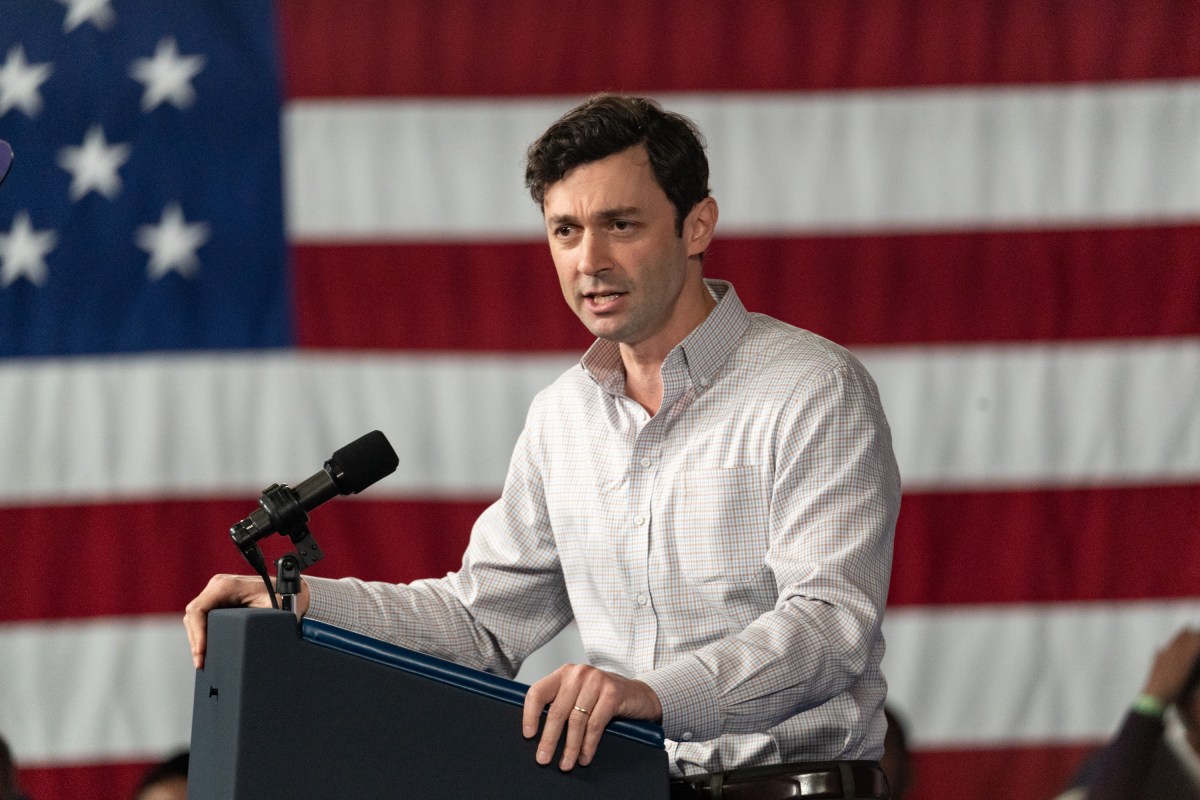
What Polls, Georgia GOP Endorsements Reveal About Jon Ossoff’s Cross
Senator Jon Ossoff received support from two Republican mayors in his bid to win reelection against a challenge from GOP Representative Mike Collins in Georgia, one of the most dynamic battlegrounds of the 2026 midterm elections.
Georgia’s Senate race is viewed as competitive by both parties. Although political experts expect the national environment to favor Democrats amid President Donald Trump’s declining approval rating, Georgia narrowly voted for Trump in 2024, and it has a historically conservative lean despite becoming the nation’s newest contested state.
Two Republican mayors have said they plan to support Ossoff’s reelection, pointing to his constituent services benefiting their constituents in South Georgia—a rural, more conservative part of the Peach State.
Read More on Politics
Mayors Scott James Matheson of Valdosta and Julie Smith of Tifton outlined their support for Ossoff in a new report from The Atlanta Journal-Constitution. Smith told the newspaper Ossoff has been “very good” to the region.
“I’m a Republican, but there are times when a person exceeds the party. They go above and beyond,” she said.
Conservative commentator Erick Erickson also discussed Ossoff’s support from some Republicans on the Politically Georgia podcast, a clip of which was shared by Ossoff’s campaign.
“You talk to farmers in South Georgia. They can get him on the phone. They can get his staff on the phone. They can get help. You talk to Republicans in Houston County, a very Republican part of the state. They know that they can reach out to Ossoff,” he said.
Ossoff told Newsweek on Thursday, "I’m deeply grateful to Mayors Smith and Matheson for their support and for their leadership in Tifton, Valdosta, and across South Georgia. Georgians have much more in common than apart, and that’s why we are building such a strong bipartisan coalition to serve our state."
Newsweek also reached out to the Collins campaign for comment via email.
Jon Ossoff’s Support Among Republicans in Polls
Collins retains support among the vast majority of Republican voters, even as Ossoff builds up strong leads among Democrats and independents. But more Republicans are breaking for Ossoff than Democrats for Collins in the latest surveys of Georgia, and even small shifts could be meaningful in such a close race.
In an AARP poll, 7 percent of Republicans said they would vote for Ossoff, while just 2 percent of Democrats said they would vote for Collins. It was conducted by Fabrizio Ward and Impact Research, among 1,060 likely voters from July 13-16. It had a margin of error of plus or minus 3 percentage points.
A Wick poll showed that Ossoff received the backing of 9 percent of Republicans, compared to Collins’ 7 percent among Democrats. It surveyed 1,175 Georgia voters from June 27-30, with a margin of error of plus or minus 2.9 percentage points.
A Fox News poll gave Ossoff support from 10 percent of Republicans; Collins received support from only 3 percent of Democrats in that poll. It surveyed 1,002 Georgia voters from June 23-27, with a margin of error of plus or minus 3 percentage points. The survey was conducted by Beacon Research and Shaw & Company Research.
Jon Ossoff’s Chances of Winning in Georgia
Ossoff has built a polling lead over recent surveys. In the AARP poll, he led Collins by 9 points, 52 percent to 43 percent. The Wick poll gave him a 4-point lead, 47 percent to 43 percent, while the Fox News poll showed him up 13 points, 56 percent to 43 percent.
The polls have led to rating changes from major forecasters. The Cook Political Report now classifies the race as Lean Democratic, while Sabato’s Crystal Ball views it as Likely Democratic.
Analyst J. Miles Coleman of Sabato’s explained the shift in a July 30 update, pointing to Ossoff's strong fundraising and polling lead as reasons he is favored.
“Perhaps another way to describe our thinking is that, while we can easily see this race being decided by a mid-single-digit margin, we are increasingly confident of the outcome. While we have had the race rated as Leans Democratic, by this point, it would be a true shock if Ossoff actually went on to lose,” he wrote.
Ossoff is also favored in prediction markets, having a 92 percent chance of winning on Kalshi and a 93 percent chance on Polymarket as of Thursday.
Georgia was viewed as a reliably Republican state for much of the 2000s and 2010s but has become a true swing state over the last few election cycles. The shift was driven by rapid growth and demographic change in Atlanta and its surrounding suburbs.
In fact, Atlanta’s suburbs were among the only places in the country to get more Democratic from 2020 to 2024, despite major shifts rightward elsewhere across the nation—a sign of how quickly these areas are trending leftward.
Democrats hope those trends continue and accelerate in 2026 as they work to continue building progress in Georgia.
Trump carried Georgia by about 2.2 points in the 2024 presidential election, after Joe Biden won the state by roughly 0.2 points in 2020. Trump won Georgia by about 5 points in 2016, while Mitt Romney won it by roughly 8 points in 2012 and John McCain by about 5 points in 2008.
Georgia Is Must-Win State for Democrats
Democrats are hoping to flip control of the Senate this year despite facing a difficult map. Republicans hold a 53-45 Senate majority—excluding independent Senators Bernie Sanders and Angus King who caucus with Democrats—so four seats must flip for Democrats to win control of the upper chamber. In addition to Georgia, Democrats are defending a seat in one other Trump-won state, Michigan.
GOP-held seats in Maine, which Trump lost by 7 points, and North Carolina, which he won by 3 points, are viewed as prime chances for Democratic pickups. But even if Democrats win all four of those races, Republicans would still hold a majority with 51 senators.
This means Democrats would also have to flip seats in more conservative states that Trump won by double-digits in 2024. Alaska, Iowa, Ohio and Texas are viewed as the most competitive of those states, as polls show tightening races.
Republicans were favored to retain Senate control on prediction markets, having a 54 percent chance on Kalshi and a 55 percent chance on Polymarket of doing so as of Thursday afternoon.