


 Florida
Latest Coverage
See all articles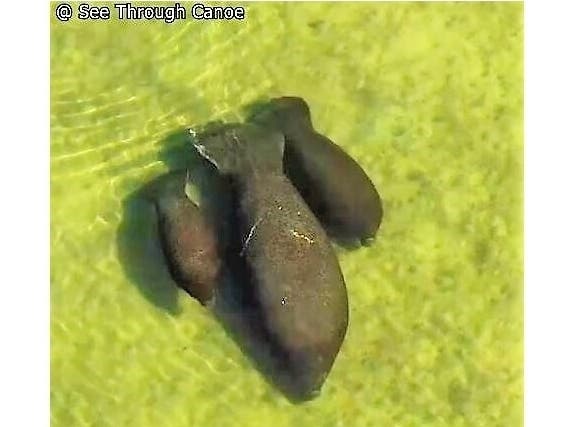
Video: Rare Twin Manatee Calves Spotted By See Through Canoe
Community Corner Video: Rare Twin Manatee Calves Spotted By See Through Canoe With the help of a $200,000 federal grant from U.S. Rep. Kathy Castor, ZooTampa hopes to save more of these gentle giants. Reply
Less than 4 percent of manatee calves born are twins. (Michael McCarthy/See Through Canoes)
ZooTampa staff load a stranded baby manatee onto a carrier. (ZooTampa)
The zoo rehabilitated 15 sick and injured manatees last year. (ZooTampa)
A ZooTampa employee feeds an orphaned manatee calf. (ZooTampa)
PINELLAS COUNTY, FL — While canoeing in the waters off Pinellas County beaches, Michael McCarthy happened upon a rare sight.
McCarthy, a marine photographer and videographer as well as the owner of See Through Canoe in Seminole, has seen just about every marine critter that inhabits the Gulf Coast. But this was the first time McCarthy had seen a mother manatee with twin calves swimming on either side of her.
The last time a mother manatee and her twins were spotted in the Tampa Bay area, according to the Mote Marine Laboratory & Aquarium in Sarasota, was April 15, 2016, when resident Karl Nelson captured a mother and her twins on video in the Grand Canal along Siesta Key. He sent the video to Mote and the staff biologists recognized the mother immediately. Four years earlier, staff from Mote and the Florida Fish and Wildlife Conservation Commission rescued that same manatee also accompanied by a calf. Mote had been tracking the mother manatee, named Tomo-Bello, for years when she was discovered in 2012 with a wound on top of her head.
Tomo-Bello and her calf were transported to ZooTampa at Lowry Park where marine veterinarians discovered the open wound had allowed toxins from red tide to enter her bloodstream, causing her to behave unusually. Tomo-Bella and her calf were nursed back to health and released in September 2012. Four years later, Mote received the video from Nelson showing Tomo-Bello fully recovered and swimming with newborn twin calves. Biologists said she's given birth eight times but these were her first twins.
Twins occur in only 1.4 to 4 percent of all manatee births.
Throughout most of the year, the West Indian manatees that make their home off the coast of Florida can be found throughout the warm tropical waters of the Sunshine State.
But, in winter when temperatures dip, the giant whiskered mammals that weigh up to 100 pounds seek the warmer waters of Florida's rivers, springs and the warm-water discharge around power plants. Southwest Florida has all the features necessary for manatees to thrive, including plenty of seagrass and other vegetation to munch on and warm-water refuges where they breed and give birth because manatees can't tolerate temperatures below 68 degrees for extended periods of time.