


 Kentucky
Latest Coverage
See all articles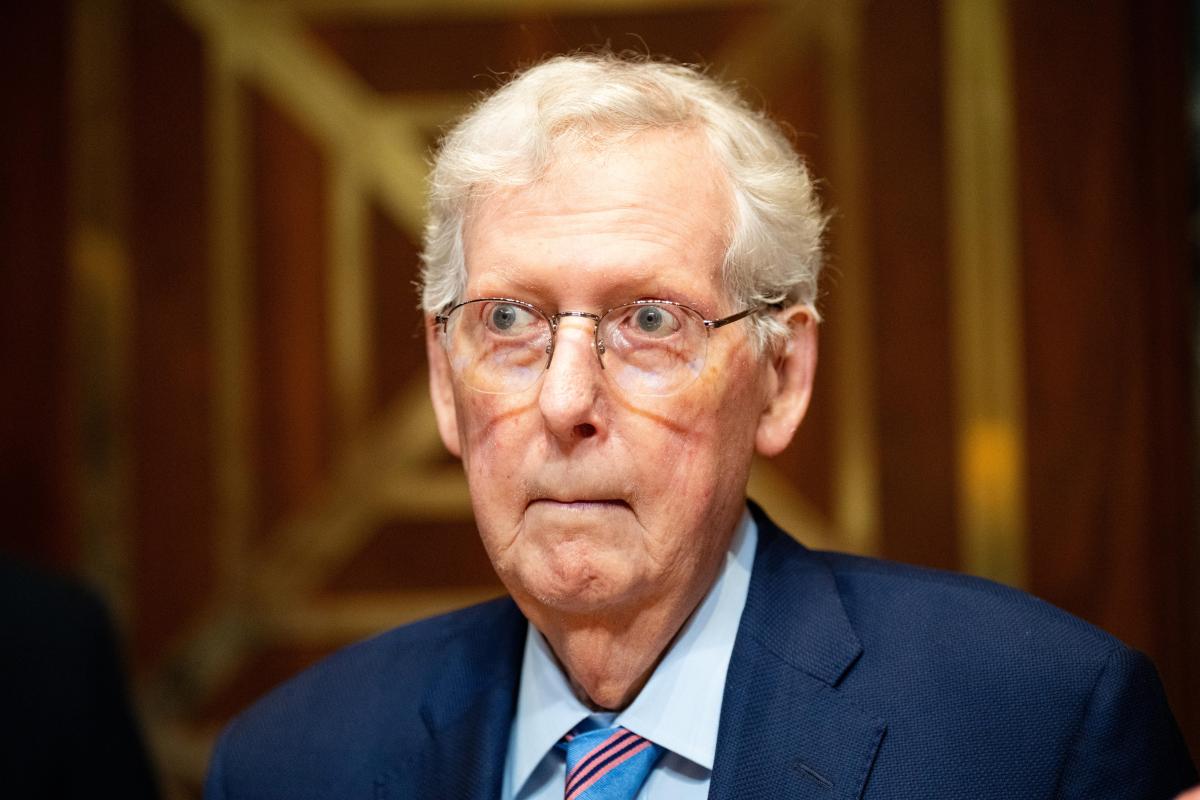
Mitch McConnell Absence Sparks Push To Change Congress Rules
The prolonged absence of several lawmakers has catalyzed into a wider debate over whether Congress should implement mandatory health disclosure rules for its members.
Calls for greater transparency have been fueled by the lengthy and until recently unexplained disappearance of Republican Senator Mitch McConnell, who has not been seen publicly after being admitted to hospital in mid-June. After weeks of speculation, the 84-year-old Kentucky lawmaker released a photo of himself in a hospital bed, as well as a statement saying the absence was due to a fall and a subsequent case of pneumonia.
"I’ll keep working hard to get back on the Senate floor as soon as possible," he said in the statement published Sunday. "And I’ll keep you posted on the progress of my recovery."
Read More on Politics
Newsweek has contacted McConnell’s office for further information and comment.
This comes after his fellow Republican, New Jersey Representative Tom Kean Jr., missed nearly four months of House votes—due to what he later disclosed was a depression-related hospitalization.
And while the causes of their unexplained withdrawal from public view are now known, the cases have prompted Democrats to push for greater accountability and transparency.
On Tuesday, Democratic Representative Ritchie Torres said he would be introducing legislation requiring lawmakers to file a "public notice" explaining any "extended absence from voting." Under the Duty of Transparency Act, members would need to notify constituents that they will be absent, as well as "roughly how long they expect to be away, and whether they are still able to perform their official duties" during this time.
Newsweek has contacted Torres’ office via email for further comment.
What Do Members of Congress Have To Disclose?
Congress has extensive rules governing financial and ethics disclosure requirements—overseen by the respective chamber’s ethics committee—but relatively few governing medical disclosures or attendance.
Under the current House and Senate rules, members of Congress are typically not required to publicly state why they may have missed votes, nor inform constituents how long they could be absent or any health-related reasons for this.
Some members, however, have voluntarily provided such information. Senator John Fetterman’s office, for example, issued periodic updates on the Pennsylvania Democrat's condition after he was hospitalized for depression in early 2023, during which he missed dozens of Senate roll-call votes.
"Currently, there is no general requirement that Members proactively disclose extended absences to the public," Representative Torres’ office said on Tuesday. "Constituents often learn that their representative has missed a significant stretch of votes only through news coverage, vote tracking websites, or word-of-mouth, sometimes well after the fact."
Push for Greater Transparency
Both McConnell and Kean’s offices have said that the lawmakers remained involved in official congressional activities during their respective absences, but that health issues prevented them from attending votes.
"On the advice of my doctors, I won’t be able to return to the Senate floor to vote quite yet," read Sunday’s statement from McConnell. "But rest assured that, in the meantime, I’m not taking a break from the Senate business that matters to you."
Kean, meanwhile, has introduced legislation and submitted remarks to the Congressional Record despite being absent from D.C. and missing more than 140 votes over several months.
"As someone who has lived with depression, I have deep sympathy for anyone struggling with mental illness," Representative Torres posted to X after Kean revealed the reason for his absence.
"At the same time, public office carries a duty of transparency," the post continued. "When a public official is absent for an extended period, the public has a right to an honest explanation."
And other members of Congress have joined in these calls.
"How is it that we have sitting, elected members of Congress going missing for months at a time," New York Democrat Alexandria Ocasio-Cortez told a reporter this week. "Especially right now, when the margins in the Senate are razor thin, when the margins in the House are razor thin."
"I don’t even know how this is legal," she added.