


 Nebraska
Latest Coverage
See all articles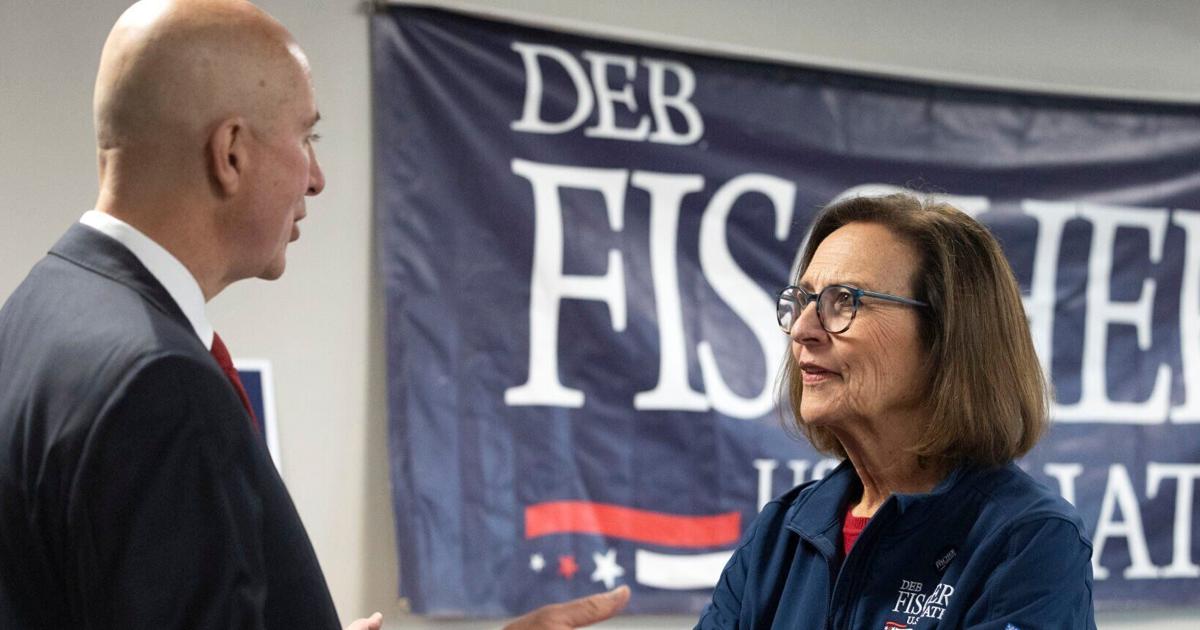
Public Pulse: Reader has a message for Pete Ricketts and Deb Fischer
In today's Public Pulse, readers weigh in on President Donald Trump's nominee for Attorney General, Omaha's tax policies, and the way new Medicaid requirements impact cancer patients.
Want your voice to be heard in The Pulse? Fill out this form, or shoot us an email at [email protected].
Ricketts, Fischer must vote no on Blanche
The Senate Judiciary Committee has forwarded the nomination of Acting Attorney General Todd Blanche to the full Senate. The Senate will now vote on whether to approve his appointment as permanent attorney general.
Todd Blanche is an exceptional advocate, a bulldog fighter for his clients. However, serving as attorney general of the United States means representing the interests of the nation, not individual clients. Blanche has shown himself to be singularly disqualified for that position, and the Senate should vote no on his appointment.
The most outrageous action Blanche has taken involves the settlement of a lawsuit brought by President Donald Trump against the IRS. Unlike many presidents before him, Trump refused to disclose his personal tax returns. During his first term, those returns were leaked to the public by an IRS contractor. An invasion of privacy is a civil wrong that should be compensated through judicially determined monetary damages.
The settlement Blanche negotiated instead created a fund for individuals who were not parties to the suit and provided blanket immunity against IRS cases, both civil and criminal, involving Trump and his family. The judge rejected the settlement, indicating the parties were not adverse. The actions of the attorneys involved, including Blanche, were so far outside normal practice that the judge referred them to the bar associations that license them for possible sanctions, including disbarment. Blanche's nomination was ultimately forwarded by the Judiciary Committee after he stipulated that he had changed the proposed settlement.
In more than 50 years of studying, practicing and teaching tax accounting and law, I have never seen such a sweeping offer of immunity to a taxpayer. I cannot think of a circumstance in which an ordinary taxpayer would receive such protection. Should the president of the United States receive such favored treatment?
Sens. Pete Ricketts and Deb Fischer should vote no on providing Blanche a permanent appointment.
Tom Purcell, Omaha
Nebraska tax system must match reality
The debate over Nebraska taxes has become increasingly disconnected from economic reality. As our economy has shifted into the digital age, Nebraska's tax system needs to move more toward consumption taxes.
Omaha has demonstrated that consumption taxes can work. Although former Mayor Jean Stothert initially opposed the restaurant tax, she later expanded it to include food trucks. The revenue has partially helped reduce property taxes, and Mayor John Ewing has kept the tax in place. This year alone, it has generated more than $45 million.
The other problem is that government spends more without any sense of consequences.
Yet property taxes remain too high. City officials often state that developments would not occur without Tax Increment Financing, or TIF. My response is that TIF is popular because property taxes are too high to begin with. If property taxes were lowered, more development would take place.
Unfortunately, I have little confidence that elected officials and candidates will seriously address this economic reality.
Andrew L. Sullivan, Omaha
New policy a disservice to cancer patients
As practicing oncologists in Nebraska, we see the profound strain a cancer diagnosis places on patients. Recent reporting that Nebraska has begun disenrolling residents under new Medicaid work requirements raises deep concerns for those of us caring for these vulnerable individuals.
While the policy aims to promote work, its clinical reality is dangerous for people facing life-threatening illnesses. A cancer diagnosis does not automatically exempt someone from proving 80 hours of monthly work, volunteer service or schooling. Instead, patients must navigate a complex process to prove they are medically frail, forcing individuals undergoing chemotherapy, radiation or major surgeries to continually submit verification paperwork.
Cancer care is unpredictable. A single missed form or administrative delay can result in the loss of coverage, delaying lifesaving treatments and medications. Requiring physicians to evaluate nonclinical work capacity also takes valuable time away from direct patient care.
A documented cancer diagnosis should be enough to qualify for an automatic, claims-based exemption. No Nebraskan fighting for their life should lose access to cancer care simply because they were too ill to navigate confusing paperwork.