


 South Carolina
Latest Coverage
See all articles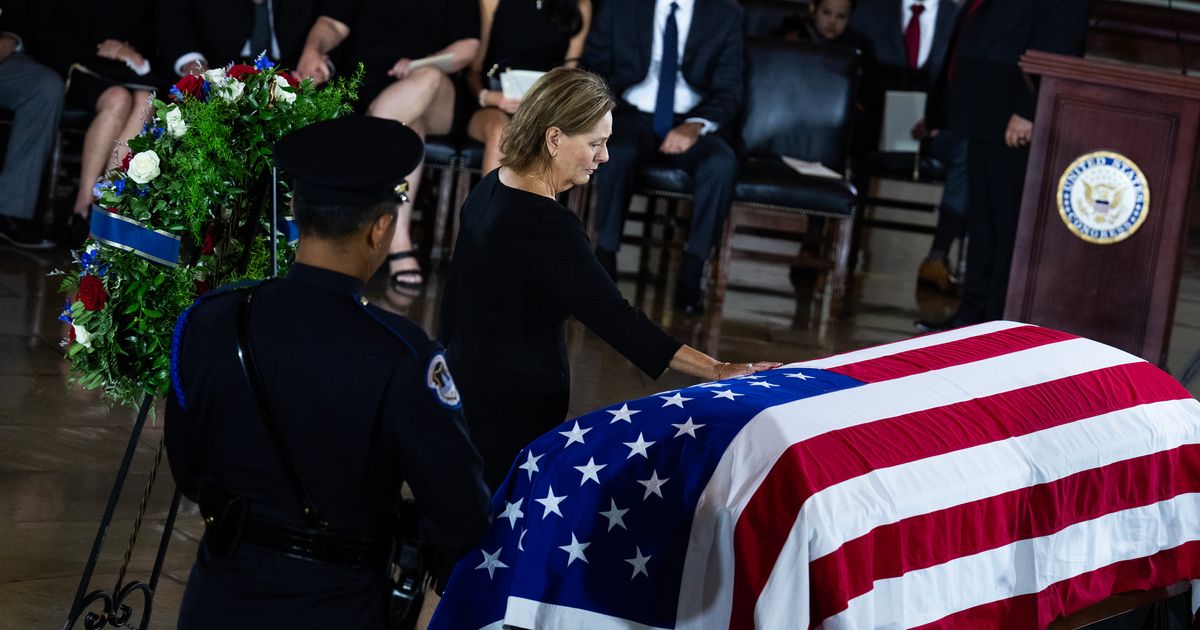
Here’s Who Might Actually Win Lindsey Graham’s Seat
On the same day the late Lindsey Graham was memorialized in Washington at the Capitol and the National Cathedral, the filing period for the August 11 special primary to replace him as Republican nominee for another Senate term closed. A dozen candidates qualified to run, some formidable, some forgettable, and even a couple who don’t appear to live in South Carolina.
Three potentially strong Republicans decided, in the end, to give the race a pass. One was Lieutenant Governor Pamela Evette, who apparently decided one bitter defeat — she was trounced in a gubernatorial runoff by Attorney General Alan Wilson in late June — was enough to risk for this year. Another was soon-to-be-former congresswoman and attention magnet Nancy Mace, who did much worse than Evette in the gubernatorial contest. And a third was former congressman Trey Gowdy, a blast from the past who is now a Fox News gabber and is safe from contemporary South Carolina GOP conflicts and rivalries. Gowdy decided to stick with his day job.
Even without these worthies, the Senate field is broad and deep enough that it’s very unlikely anyone will win a majority on August 11, so the top-two finishers will proceed to an August 25 runoff. If there’s anything worse, turnout-wise, than a mid-August special election in the hellish summer weather of South Carolina, it’s a late-August runoff. So you can expect all the candidates to list to the right ideologically in order to appeal to the most likely Republican voters.
The candidates likely to compete seriously for the runoff field are congressmen Ralph Norman and Russell Fry and interim senator (and Lindsey Graham’s adored little sister) Darline Graham. The first two men certainly qualify as certified right-wing ideologues. Norman is a veteran House Freedom Caucus militant who lusts for deep cuts in safety-net programs and has one of the most rigorous anti-abortion voting records in Congress. His endorsement by former senator (and then Heritage Foundation president) Jim DeMint perfectly captures the hyperconservative legacy he represents; he’s also won endorsements from Nancy Mace and from hard-core reactionary senators Mike Lee and Rick Scott. Fry is a newer figure who is considered very close to Donald Trump. The president backed him in a 2022 primary in which Fry walloped Congressman Tom Rice, who had the temerity to support Trump’s impeachment after the failed coup of January 6. The general expectation when Fry expressed his interest in the Graham seat was that he would win Trump’s endorsement. Now he’s in a position (one that has occasionally worked in other states) to present himself as Trumpier than Trump’s own candidate.
That’s because the president backed the third viable candidate for August 11, Darline Graham (who appears to have dropped her married last name, Nordone, for this political season). Graham has never run for office before, serving in an inconspicuous state appointive office on the Commission for the Blind. When Governor Henry McMaster, backed by Trump, appointed her to finish her brother’s current Senate term, she was widely regarded as a placeholder who represented a tribute to Lindsey but not the kind of serious pol who merited a full term. But when Trump endorsed her for the special primary, she began to be taken seriously as a political maneuverer in her brother’s tradition. Her lack of a political record is both good — giving her extraordinary flexibility to build her own brand — and bad, insofar as she has inherited as many of Lindsey’s enemies (and he had a lot of them on the right wing of the South Carolina GOP) as of his friends. Right now, she’s lashing herself to Trump and the hard right, notes The Wall Street Journal:
In her opening days as senator, Graham endorsed bills closely aligned with Trump. Her first move was to co-sponsor the SAVE America Act, an election-related proposal that is a priority for the president. Graham then backed a slate of immigration-enforcement measures, antiabortion and gun-rights bills, and the Protecting American Taxpayers Act targeting government-assistance fraud.
It appears Graham will be able to indirectly access her brother’s unused campaign funds via a transfer to the National Republican Senatorial Committee, which will be a big plus in the spring to August 11 and then to the likely August 25 runoff.
Public polling in this race has been spotty and hasn’t really kept up with the evolution of the field. A candidate forum on August 3 will test Graham’s political chops and also the willingness of her rivals to go after her so soon after her brother’s funeral. Even if Fry and Norman treat her with kid gloves, some of the less viable candidates could go after her with a claw hammer. Self-funding conservative activist Mark Lynch ran against Lindsey in June, winning 29 percent of the vote; he’s likely to renew hostilities. And then there’s the legendary (though not always in a good way) former governor and congressman Mark Sanford, who is expected to attack the entire field and the whole party as insufficiently committed to fiscal discipline.
Geography could matter in the Senate primary as well. Graham is from the Upstate region, like her brother. Norman is from nearby Rock Hill, on the edge of the Charlotte metropolitan area. And Fry is from the northeast South Carolina coast and represents regions known as the Grand Strand and the Pee Dee. The other U.S. Senator, Tim Scott, is from the southeastern South Carolina Low Country, as is Sanford.