


 Wisconsin
Latest Coverage
See all articles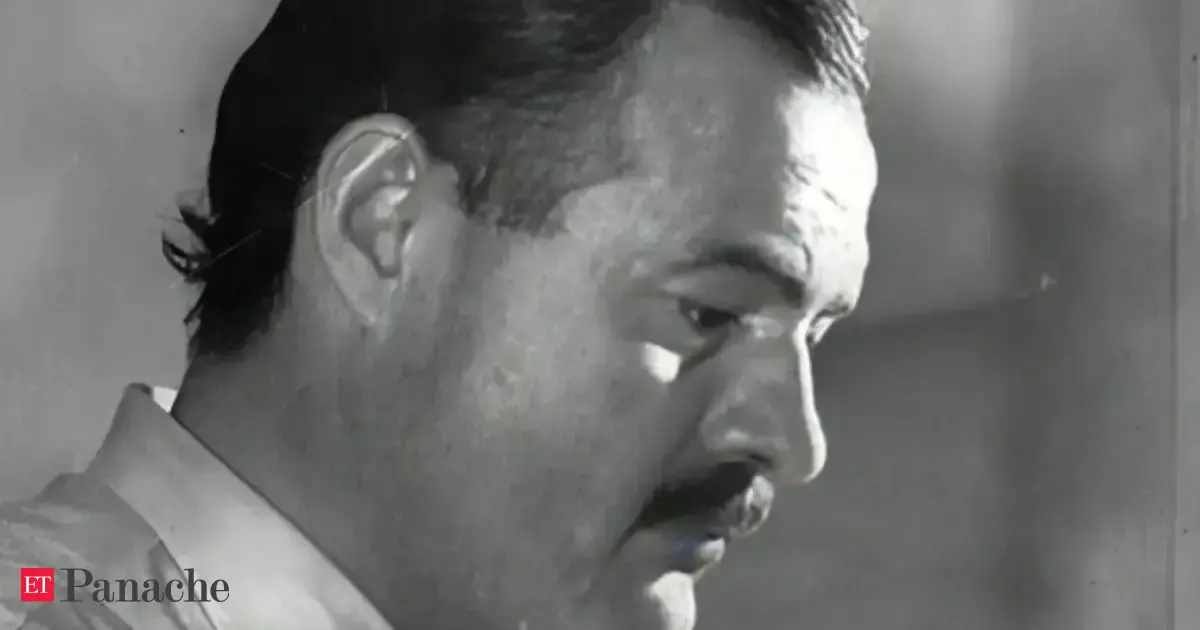
Quote of the day by Ernest Hemingway: ‘Forget your personal tragedy. When you get damned hurt use it — don't cheat with it. Be as faithful to it’; writer of The Old Man and the Sea and Nobel Prize win
Synopsis
Ernest Hemingway's 1934 advice to F. Scott Fitzgerald, urging writers to 'use' personal tragedy rather than 'cheat' with it, remains profoundly relevant. This stark counsel, born from a complex friendship and critique of Fitzgerald's work, emphasizes facing pain honestly and faithfully to create meaningful art. Hemingway's own legacy of economical yet piercing prose underscores this powerful message.
Some advice refuses to age. It cuts through time, ego, and circumstance to land exactly where it hurts and heals at once. Few lines capture that better than a brutally honest note written by Ernest Hemingway in 1934. It wasn’t meant for the world, but for a fellow writer struggling deeply. Decades later, it still reads like a personal challenge to anyone who has ever tried to turn pain into something meaningful.
Hemingway, one of the most famous American novelists, short-story writers, and journalists, built a legacy on restraint. His writing style was economical, stripped of excess, yet emotionally piercing. That understated approach went on to influence an entire generation of 20th-century writers. Off the page, he was just as compelling. His adventurous life and blunt public persona only added to the myth around him. Across seven novels, six short-story collections, and two non-fiction works, many of which are now considered classics of American literature, Hemingway earned global recognition, including the 1954 Nobel Prize in Literature.
But this quote, often shared for its stark clarity, comes from a deeply personal place. In a letter to F. Scott Fitzgerald, dated May 28, 1934, Hemingway wrote: "Forget your personal tragedy. We are all bitched from the start and you especially have to hurt like hell before you can write seriously. But when you get the damned hurt use it—don't cheat with it. Be as faithful to it as a scientist—but don't think anything is of any importance because it happens to you or anyone belonging to you.”
Context of the letter
The letter was not written in isolation. It came at a time when Fitzgerald, best known for his 1925 novel The Great Gatsby, was navigating one of the most difficult phases of his life. Financial troubles, his wife’s mental illness, and his own struggles with alcoholism had slowed his writing. It took him nearly nine years to complete his next novel, a delay that tested both his confidence and his friendships.
You Might Also Like:
When tragedies hit hard in life, remember what legendary singer Roy Orbison said after losing his first wife and 2 sons: 'Life is an adventure. Things will happen to you and you have to face it'
What do researchers say?
According to researchers, one of Hemingway’s most significant and complicated relationships was with Fitzgerald. As noted by Sandra Spanier, Penn State Edwin Erle Sparks Professor of English and general editor of the Hemingway Letters Project, Fitzgerald’s prolonged struggle to finish his next book became a point of frustration for Hemingway.
When Tender Is the Night was finally published in 1934, Hemingway didn’t hold back. On May 28 that year, he wrote a long, sharply critical letter to Fitzgerald dissecting the novel. His words were direct, even harsh, reflecting both his expectations and his disappointment.
Even in that sharply critical letter, Hemingway showed a quieter side of restraint. On the envelope flap, he added a handwritten note acknowledging that he had left out the strengths of Fitzgerald’s work and that the novel had real brilliance he had not fully addressed. It softened the edge of his earlier criticism and hinted that his assessment was not the complete picture.
Years later, his perspective shifted more clearly. He admitted to their mutual editor, Maxwell Perkins, that he had been too harsh in his original response and that revisiting Tender Is the Night left him genuinely struck by how strong the novel actually was. According to Sandra Spanier, this evolving view reflected a relationship that was deeply layered, shaped by admiration as much as friction, where both writers cared for each other even when they struggled to connect.
You Might Also Like:
Quote of the day by Oscar Wilde, ‘It is absurd to divide people into good and bad. People are either charming or tedious’; lessons on human nature and perception by The Canterville Ghost writer
That tension between admiration and criticism mirrors the very advice Hemingway gave. To face pain honestly. To use it without distortion. To stay faithful to it, but not be consumed by it.
(Catch all the Business News, Breaking News, and Latest News Updates on The Economic Times.)
Subscribe to The Economic Times Prime and read the ET ePaper online.
...moreless
(Catch all the Business News, Breaking News, and Latest News Updates on The Economic Times.)
Subscribe to The Economic Times Prime and read the ET ePaper online.
...moreless
Locker to exchange: How India can become a global gold hub
Amid FII flight and BoP strain, India bets on ‘patient capital’
First-time buyers, entry cars: The missing links in India’s auto boom
INR35k-cr windfall: What Hormuz crisis, rising crude mean for ONGC, OIL
Is private sector corruption free? Here's the reality...
These mid-cap stocks with ‘Strong Buy’ & ‘Buy’ recos can rally over 25%, according to analysts
1
2
3