


 Kentucky
Latest Coverage
See all articles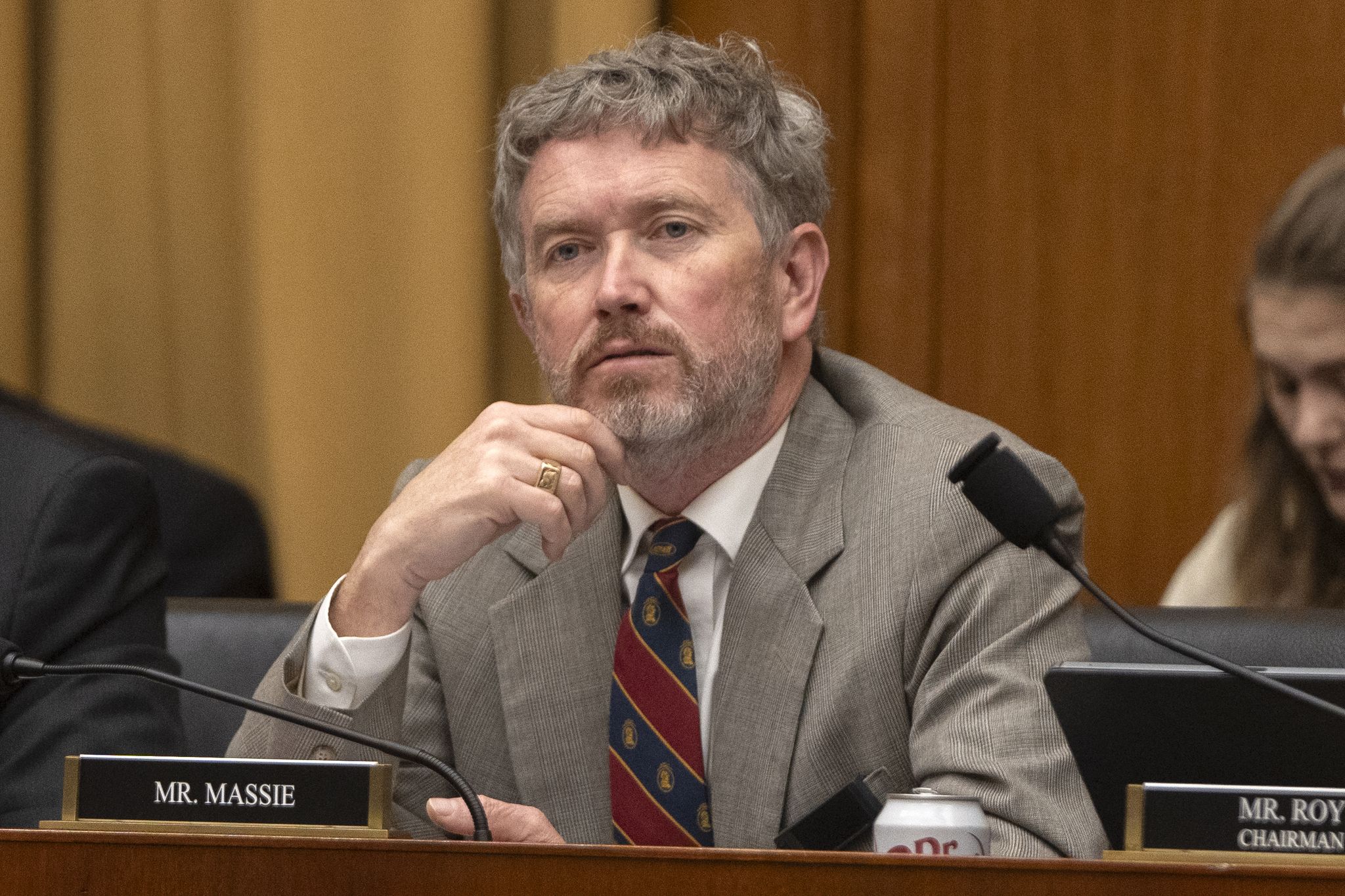
Thomas Massie is showing political courage
Consider the long list of politicians who held fast to their values and suffered for it: U.S. Rep. Liz Cheney investigating the capitol invasion of Jan. 6, 2021; U.S. Rep. Chip Roy holding the line on spending against Republican budget priorities; U.S. Sen. Joe Manchin bucking the Democratic Party’s energy policies; or, familiar to Dallas Morning News readers, Texas state Rep. Glenn Rogers opposing school vouchers. Those are just a few examples. In three of them, the courageous politician is no longer in power. In the fourth, Roy is facing long odds against a party loyalist in the race for Texas attorney general.
Despite aligning with his party the vast majority of the time, Massie has shown a willingness to break ranks, most notably in voting with Democrats to require the release of the Jeffrey Epstein files. In response, Trump publicly attacked Massie in his own district, calling him “the worst person" and "a disaster” for the Republican party.
Massie’s response illustrates a classical understanding of courage. Aristotle defined courage as a mean between cowardice and recklessness: It requires neither blind obedience nor indiscriminate opposition, but rather a measured willingness to do what is right for its own sake. Massie’s actions seem to fit this framework. He does not reflexively oppose party leadership, nor does he capitulate to it. Instead, he selectively dissents when he believes principle demands it, accepting the political risks that follow.
That’s an important quality in the Republican Party right now. Trump’s defenders feel as if his opponents would attack him no matter what he did. In some cases, they’re right. But a thoughtful approach like Massie’s belies that complaint.
Importantly, Massie’s approach also shows that courage in politics need not be combative to be effective. Aristotle’s related virtues, such as friendliness and wit, help explain how dissent can be expressed without descending into hostility or sycophancy.
Massie often maintains a tone of friendly respect toward Trump, acknowledging — as he recently told a Cincinnati news station — that he likes him, voted for him three times and continues to share many of his positions. Yet Massie also signals independence by refusing to accept all of Trump’s claims uncritically, invoking a “trust but verify” principle — a nod to the conservative icon and former President Ronald Reagan, and a subtle critique of Trump’s frequent dishonesty. Massie also underscores his own resilience, in contrast with Trump, pointing to his “thick skin” as a way to firmly but diplomatically rebuff Trump’s attacks.
Massie’s occasional use of humor further reinforces this balancing act. By wryly noting that Trump’s broadsides may have boosted Massie’s reelection campaign rather than torpedo it, Massie undercuts the force of presidential intimidation.
As Massie predicted in the interview, his constituents will “figure this out”— re-electing him, despite Trump’s objections. In the end, Massie’s confidence in his voters, rather than in his party’s leader, distills into another quiet but pointed principle: Ordinary people are often more steadfast in their convictions than those who wield the most power.
This juggling act allows Massie to reaffirm his strength of character and to resist undue political pressure, without alienating every voter or appearing opportunistic. His rhetorical choices certainly don’t guarantee his reelection, but they demonstrate courage as a sustainable virtue in an otherwise acrimonious political environment.
Massie’s actions may not satisfy those who demand more forceful repudiations of party leaders. Yet his example highlights an important point: Courage in politics is not only about dramatic acts of defiance, but about consistently exercising independent judgment in the face of pressure.
Kenneth Zagacki is a professor of communication at North Carolina State University. Richard Cherwitz is professor emeritus at the Moody College of Communication at the University of Texas at Austin.
Have thoughts about this? Send a letter to the editor using our letters form or email [email protected]. Letters should be no more than 200 words and include the first and last name of the writer and city of residence.