


Democrats Lead the GOP in Three Texas Latino Districts Trump Carried-Poll
Democratic candidates are leading their Republican opponents in three Texas congressional districts that President Donald Trump carried, one by double digits, in 2024, according to new polling from Texas Southern University's Barbara Jordan-Mickey Leland School of Public Affairs.
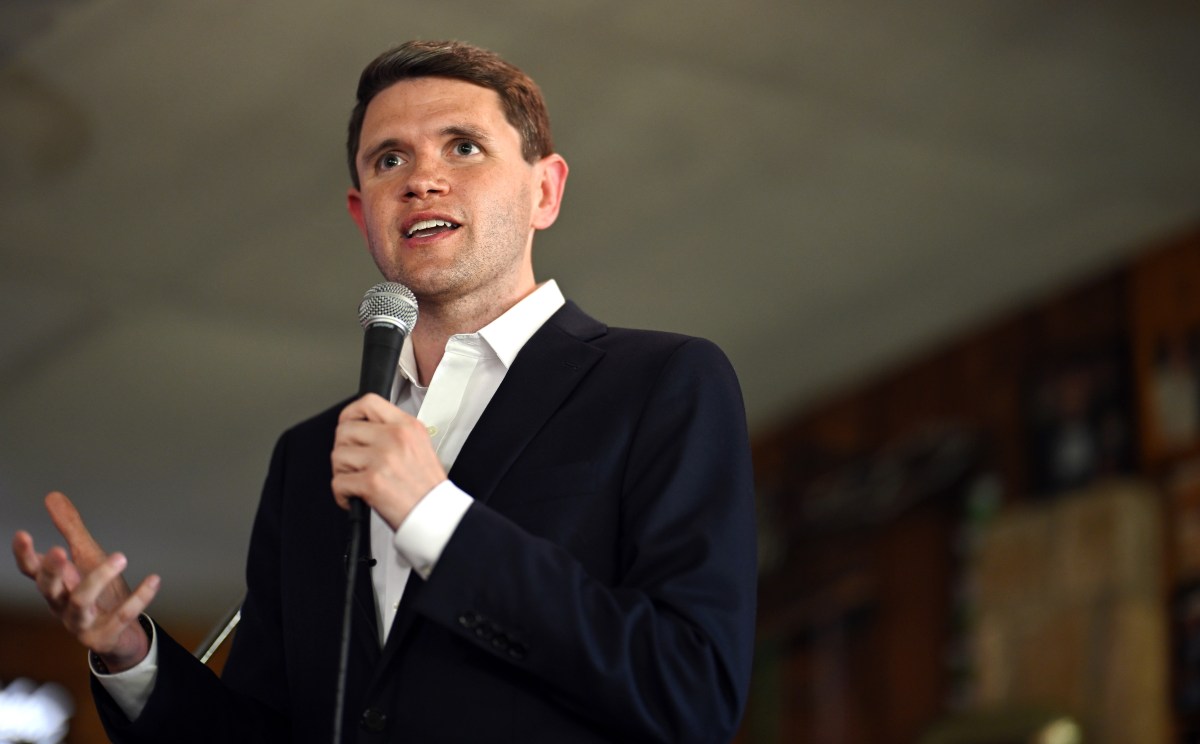
The survey found Tejano singer Bobby Pulido, the Democratic nominee in Texas' 15th Congressional District, leading Republican Representative Monica De La Cruz 50 percent to 45 percent. Trump won the district by 18 points in 2024.
In the same district, Democratic Senate nominee James Talarico led Republican Attorney General Ken Paxton 50 percent to 42 percent. Republican Senator Ted Cruz carried the district by 9 points that year.
Read More on Politics
The poll also surveyed Texas' 28th and 34th Congressional Districts. In the 28th, Talarico led Paxton 51 percent to 41 percent, in a district Cruz won by less than a point in 2024. In the 34th, Talarico led Paxton 53 percent to 42 percent, after Cruz carried it by 2 points.
Republican strategist Mike Madrid, who has spent years tracking Hispanic voting behavior, said the numbers reflect something the political establishment has been slow to grasp.
"People, I think, broadly are failing to understand that the Latino vote is the largest swing vote in America," Madrid told Newsweek in an interview.
Newsweek has reached out to the Pulido, De La Cruz, Talarico and Paxton campaigns for comment.
The 15th District: An 18-Point Swing in Play
Texas' 15th Congressional District runs from Hidalgo County on the border to Guadalupe County near San Antonio and is roughly 81 percent Hispanic, according to Census Bureau data cited by the Texas Tribune. Trump carried it by 18 points in 2024, and De La Cruz won reelection there the same year by 14, four years after becoming the district's first Republican representative.
The Texas Southern University poll now shows both Pulido and Talarico ahead there, a reversal large enough that Madrid called it the third survey in a week to put Pulido up by 5 to 7 points.
"While people saw this shift to the right in 2024, most people were thinking it was part of this permanent realignment," Madrid said. "A lot of people who understand the Latino vote were saying it's not that at all, that it was reflecting the frustration and anger with the economy at the time, and that frustration and anger has gotten worse."
Madrid traveled to South Texas this month to see the race up close. "I fully was prepared and have been saying I don't think the Democrats are learning their lesson," he said, before crediting Talarico's approach for changing his view after interviewing him.
"He's speaking to Latinos, but he's not speaking to Latinos necessarily as an ethnic group. He's speaking to them as a working class."
The 28th and 34th: Districts Cruz Barely Won
The pattern extends beyond the 15th District. In the 28th District, which Democrat Henry Cuellar has held even as it voted for Trump by 7 points in 2024, Talarico led Paxton 51 percent to 41 percent. Ted Cruz carried the district by less than a point that same year.
In the 34th District, which is roughly 90 percent Hispanic and rated an even split by the Cook Political Report, and where Trump also claimed victory in 2024 by 4 points, Talarico led 53 percent to 42 percent, after Cruz won it by 2 points.
Both districts still back Trump at the top of the ticket, but they are electing Democrats down ballot, a split that has made them closely watched indicators of how far south Texas Republicans' gains actually run.
Madrid said his conversations with Hispanic voters across the region kept circling back to one complaint: neither party was talking about the economy.
"A lot of them would say, look, I'm conservative, I support gun rights, I'm socially conservative," he said. "What they would say, which I thought was really insightful, was when neither party is talking about economics, then I'm going to side with the party who's with me on my cultural values."
Cultural issues were not driving the vote on their own, he argued. They became decisive only after both parties failed to deliver on the economy, leaving voters to fall back on whichever party matched their social views. "The Democratic Party has gotten unrelatable to a lot of these voters," Madrid said. "But if they were to solve and speak to the economic concerns, they could very easily get them back. They are getting them back."
The Polling Behind the Anecdotes
National survey data backs up what Madrid described hearing on the ground. In a national UnidosUS poll of 3,000 registered Latino voters, fielded April 27–May 14, 2026, and released May 27, 60 percent named the cost of living as their top priority for Congress to address, followed by the economy and wages at 40 percent, health care at 37 percent and housing at 27 percent. Immigration rounded out the top five.
A companion UnidosUS poll of 400 Hispanic voters in Texas, conducted October 8-22, 2025, with a margin of error of plus or minus 4.9 percentage points, found tariffs and trade policy ranked third among economic issues voters most wanted addressed, behind prices and affordability and wages and jobs.
A separate national poll of 1,200 Hispanic registered voters, conducted April 17-23, 2026, by Public Opinion Strategies for the LIBRE Institute, a conservative-leaning Hispanic advocacy group, found 70 percent of Hispanic voters said housing costs were unaffordable, and 83 percent said their health care costs had risen over the past year.
Deportations also register widely, though less as an economic issue than a personal one. A national poll of 2,000 registered Hispanic voters conducted March 10-20, 2026, by Equis Research, with a margin of error of plus or minus 2 percentage points, found that among Latinos who believe Trump's immigration enforcement has gone too far, most cited the detention of family members or of U.S. citizens and legal residents, rather than economic fallout, as their reason.
Still, 83 percent of respondents in the LIBRE Institute poll said they support focusing deportation efforts on people convicted of serious crimes, suggesting broad discomfort with enforcement that reaches beyond that group.
What the Numbers Suggest About November
The Texas Southern University poll is not an outlier. The University of Virginia's Sabato's Crystal Ball this week moved three Texas ratings toward Democrats: the Senate race from Leans Republican to Toss-up, the governor's race from Safe Republican to Likely Republican, and the 15th Congressional District from Leans Republican to Toss-up.
Other surveys show a tighter race than the Texas Southern University poll suggests. A University of Texas/Texas Politics Project poll released Monday had Talarico at 42 percent and Paxton at 39 percent, with 14 percent undecided and Libertarian candidate Ted Brown drawing 3 percent. Conducted August 5-13 among 1,200 registered Texas voters, the poll carried a margin of error of plus or minus 2.83 percentage points before weighting, putting Talarico's lead close to the edge of statistical noise.
An Emerson College poll of 1,000 likely voters, conducted August 9-10 with a 3-point margin of error, had Paxton ahead 47 percent to 46 percent, a statistical tie.
The two pollsters also found a race split sharply by age. "The race for U.S. Senate in Texas is sharply divided by age: voters under 50 favor Talarico by 15 points, 53 percent to 38 percent, while those over 50 break for Paxton by 11 points, 53 percent to 42 percent," Spencer Kimball, executive director of Emerson College Polling, said in a release.
Election analyst Nate Silver has urged caution against reading too much into any single result, pointing to Beto O'Rourke's 2018 Senate run as a case where Texas polling did not overstate Democratic support. O'Rourke lost that race by a narrower margin than his final polling average had predicted. Silver's FLIPR model currently gives Talarico a 59 to 61 percent chance of winning, placing the race between toss-up and leans Democratic. He attributes the edge to a favorable national environment for Democrats, controversies surrounding Paxton and Talarico's fundraising, rather than to any single poll.
Texas has not sent a Democrat to the Senate since 1988, and Talarico's advantage, where it exists, sits within or just outside most polls' margins of error.