


 Michigan
Latest Coverage
See all articles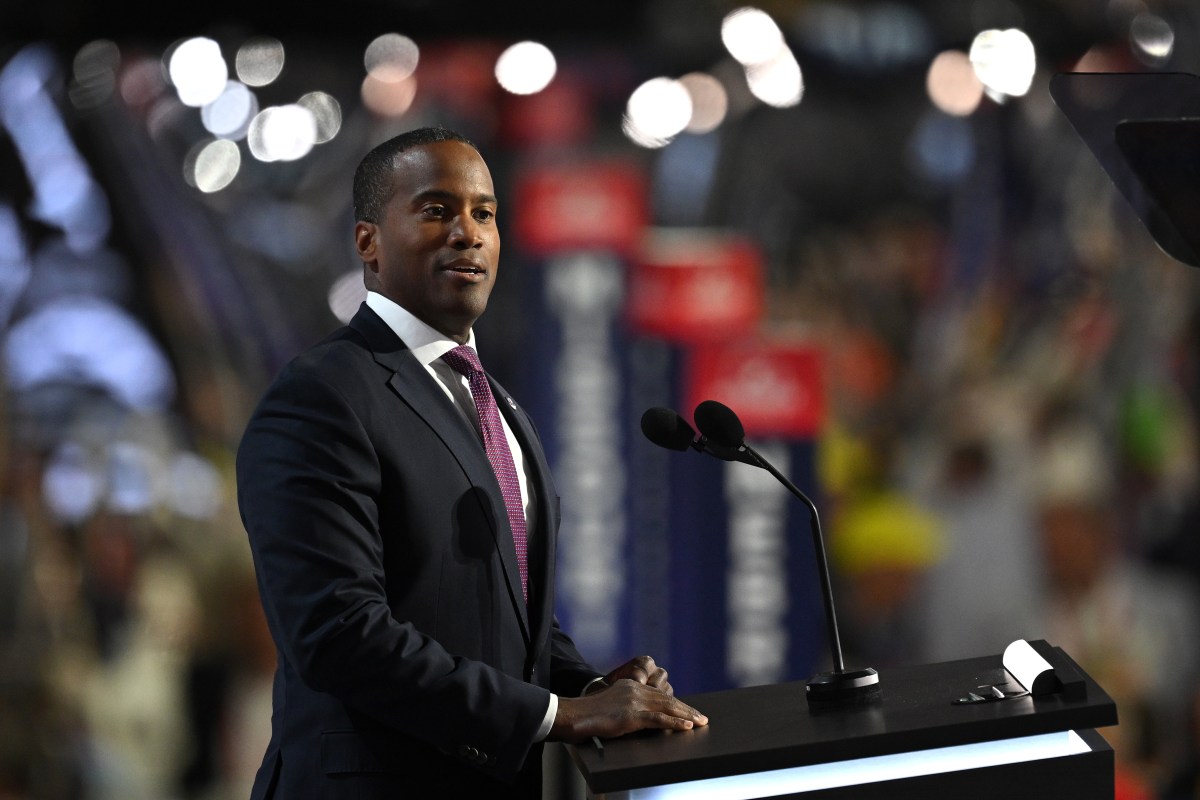
John James’ Chances of Flipping Michigan as Trump Endorses Him
President Donald Trump endorsed Representative John James in Michigan’s gubernatorial election, expected to be among the most competitive races of the 2026 midterms, on Monday.
Both Democrats and Republicans view Michigan, a swing state, as being competitive in this year’s election. Michigan is an evenly divided battleground state that backed President Donald Trump by just under two points in the 2024 presidential race after narrowly backing former President Joe Biden in 2020. Trump’s endorsement of James could be meaningful among GOP primary voters who are still undecided about who they will support in the primary.
Several candidates are running alongside James for the GOP nomination, including former Attorney General Mike Cox, businessman Perry Johnson and Michigan Senate GOP Leader Aric Nesbitt. On the Democratic side, Secretary of State Jocelyn Benson is viewed as the frontrunner against Genesee County Sheriff Chris Swanson. Governor Gretchen Whitmer cannot run again due to term limits.
Read More on News
Newsweek reached out to campaigns for comment via email.
What to Know
President Donald Trump endorsed John James in Michigan’s 2026 governor race, praising his “courage and wisdom” on Truth Social.
James leads early GOP primary polls, though a large share of Republican voters remain undecided.
Secretary of State Jocelyn Benson is viewed as the Democratic frontrunner.
Michigan is among the nation’s closest states, having shifted from handily backing former President Barack Obama in 2008 and 2012 to being a battleground in 2016, 2020 and 2024.
Why Trump Endorsed John James
Trump announced his endorsement of James in a post to Truth Social on Monday afternoon.
“A West Point Graduate, Combat Pilot, Brave Iraq War Veteran, Successful Businessman and Job Creator, and now, as a Highly Respected U.S. Congressman, John has proven he has the Courage and Wisdom to deliver strong results for the incredible people of his wonderful State, and our Nation,” he wrote.
James wrote in a post to X that Trump’s endorsement is “igniting a movement across Michigan.”
“Michigan will be prosperous, safe, affordable, and educated again for every hardworking family who believed in this state and never stopped,” he wrote.
Trump’s endorsements still carry weight among GOP primary voters, as many—but not all—candidates he supports perform well in primaries. However, the impact of a Trump endorsement is less clear in a general election amid his falling national approval ratings due to economic concerns around the cost of living.
James currently represents Michigan's 10th District, comprised of suburbs north of Detroit, in Congress.
John James’ Chances in the GOP Primary
Recent polling favors James in the GOP primary, but a notable number of Michigan Republicans still say they are unsure whom they would vote for.
The latest poll from TIPP Insights, which surveyed 555 likely voters from May 20-23, showed James in the lead with 31 percent compared to Cox’s 20 percent, Johnson’s 19 percent and Nesbitt’s 3 percent. Thirty-one percent were still undecided.
A Mitchell Research poll, which surveyed 400 likely voters from May 1-7, showed James leading with 32 percent compared to Johnson’s 23 percent, Cox’s 19 percent and Nesbitt’s 7 percent. It showed 17 percent undecided.
Meanwhile, a Glengariff Group poll showed James in the lead with 37 percent compared to Johnson’s 20 percent, Cox’s 10 percent and Nesbitt’s 7 percent; 9 percent backed other candidates and 20 percent were undecided. It surveyed 500 likely voters from April 21-24, reported Deadline Detroit.
Prediction markets favor James, who had an 84 percent chance of winning the nomination on Kalshi and an 80 percent chance of winning on Polymarket as of Monday afternoon.
Prediction markets allow traders to buy and sell contracts tied to political outcomes and current events, aggregating real‑money wagers into probability estimates. Prices fluctuate as traders react to polling, fundraising, candidate developments and broader political trends.
John James’ Chances Against Jocelyn Benson
Only one poll has been made public of the general election between Benson and James since independent mayor Mike Duggan dropped out of the race—a former Detroit mayor and Democrat.
The TIPP Insights poll showed Benson with an 11-point lead over James. Forty-nine percent of respondents said they would vote for her, compared to 38 percent who said they would cast their ballots for James. Eight percent said they would vote for other candidates, while 7 percent were still undecided.
Democrats are favored in the general election, having an 82 percent chance on Polymarket and an 84 percent chance on Kalshi as of Monday.
Benson also led polls of the gubernatorial race prior to Duggan’s exit.
How Popular Is Donald Trump in Michigan?
Trump’s approval rating will be a major factor in the gubernatorial race. The midterms are usually seen as a referendum on a president, and the party in power historically suffers losses. Trump’s approval rating will be key to the outcomes in states like Michigan.
The TIPP Insights poll showed that 58 percent of Michigan voters disapprove of Trump, compared with 36 percent who approve. A Mitchell Research Poll, which surveyed 607 likely voters from May 1-7, found that 43 percent of Michiganders approve of Trump and 56 percent disapprove.
How Michigan Became Key Swing State
Michigan is roughly evenly divided between Democrats and Republicans and has swung between both parties in recent elections.
Former President Barack Obama carried the state easily in both of his runs—by more than 16 points in 2008 and by just under 10 points in 2012. But Trump flipped it in 2016, carrying it by less than half a percentage point.
Trump lost the state in 2020, when former President Joe Biden carried it by just under 2 points. But Michigan flipped back to the Republican Party in 2024, with Trump winning it by about 1.4 points—the strongest showing for a Republican presidential candidate since 1988.
At the same time, Democratic Senator Elissa Slotkin managed to win an open seat by less than half a percentage point.
The state has become more competitive for Republicans due to a Democratic collapse in more rural areas that once leaned Democratic. Trump’s inroads with white working-class voters helped carry him to victory in the state. Harris’ collapse with Muslim and Arab American voters in 2024 also contributed to Trump’s victory in Michigan. Those voter groups will be crucial to the gubernatorial race this year.
At the same time, Democrats have made gains in suburbs of cities like Detroit and Grand Rapids, helping to offset those losses.
Michigan also has a competitive Senate race this year to replace retiring Democratic Senator Gary Peters. That race is viewed as a toss-up.
What Happens Next
Michigan’s primaries are set for August 4, 2026.
Polls and fundraising will be closely watched in the coming months to gauge where Michigan voters stand leading up to that primary. The Cook Political Report considers the race to be Lean Democratic, while Sabato’s Crystal Ball views it as a toss-up.